Our Exercise for Urinary Incontinence
Exercise for Urinary Incontinence
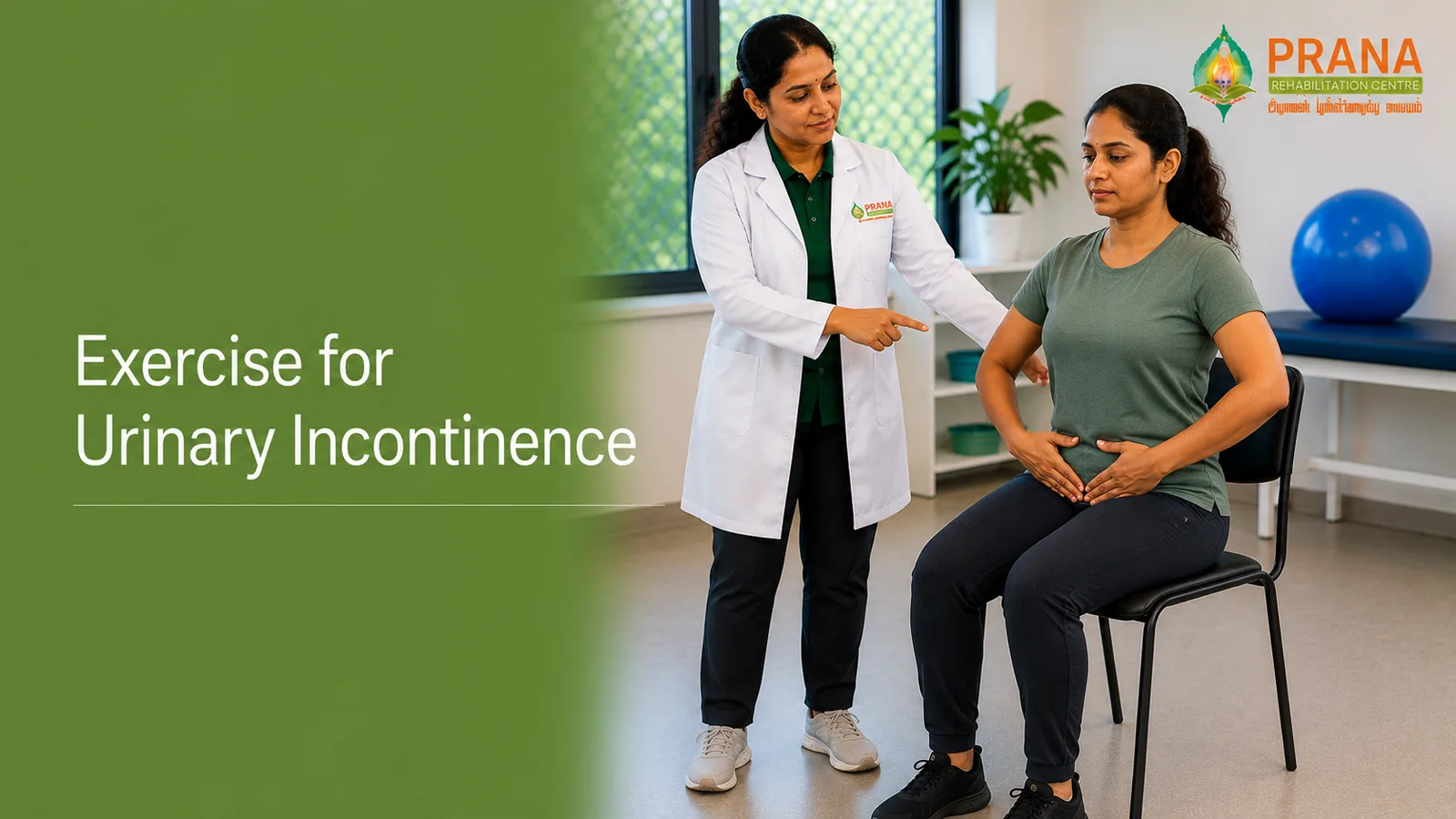
Incontinence exercises are specialized pelvic floor strengthening movements designed to improve control over bladder and bowel function. These exercises help strengthen the muscles that support urinary and bowel control, improving stability, coordination, and overall muscle function. They are commonly recommended for individuals with bladder weakness or loss of control and may also be included in neurological rehabilitation programs such as Parkinson’s disease.
Common Symptoms
- Unintentional urine leakage during coughing, sneezing, laughing, or lifting
- Frequent or urgent need to urinate
- Difficulty holding urine for longer periods
- Sensation of incomplete bladder emptying
- Reduced bladder control affecting daily activities
How It Helps You
Incontinence exercises strengthen the pelvic floor muscles, improve bladder control, and reduce accidental leakage. With regular practice, they enhance muscle coordination, build confidence in daily activities, and improve overall quality of life. These exercises also help prevent symptom progression and support long-term bladder health and function.
Note
Pelvic floor exercises should be performed gently and consistently for best results. Regular practice helps improve muscle strength, control, and stability, supporting better bladder management over time.
Physiotherapy Programs
How it works
At our stroke rehabilitation center, we focus on personalized care with expert physiotherapists and advanced therapy techniques to ensure safe, steady, and effective recovery.

Initial Assement
Understand patient condition
Personalized Plan
Tailored recovery program
Guided Therapy
Hands-on rehabilitation sessions
Patient & Family Education
Empowering through knowledge

Re-Assesment
Check recovery progress

Progress Tracking
Continuous improvement monitoring


Related Articles

Pain Management Pain is one of the most common health concerns affecting people of all ages. It may arise due to poor posture, injury, muscle …

Stress Management: Finding Balance in a Busy World Why Stress Has Become So Common ? In today’s fast-paced lifestyle, stress has quietly become a part …

"மருந்தென வேண்டாவாம் யாக்கைக்கு அருந்தியது அற்றது போற்றி உணின்" Diet plays a vital role in maintaining good health, preventing illness, and supporting recovery. It is not merely …
Frequently Asked Questions
What is physiotherapy treatment?
Physiotherapy helps improve movement, reduce pain, and restore physical function through therapeutic exercises and treatments.
What conditions can physiotherapy treat?
Physiotherapy can help with pain, injuries, muscle weakness, joint problems, paralysis, and rehabilitation recovery.
Is physiotherapy useful after rehabilitation treatment?
Yes, physiotherapy helps improve strength, flexibility, and physical recovery after rehabilitation.
What techniques are used in physiotherapy?
We use exercises, stretching, manual therapy, mobility training, and pain management techniques.
Do you provide personalized physiotherapy plans?
Yes, treatment plans are customized according to each patient’s needs.
Is exercise included in physiotherapy treatment?
Yes, therapeutic exercises are an important part of physiotherapy recovery.
Can elderly patients benefit from physiotherapy?
Yes, physiotherapy helps improve mobility, balance, and strength in older adults.
How can I book a physiotherapy consultation?
You can download mobile app from store or contact Prana Rehab through phone/WhatsApp +91 944 272 4890, or the website (https://pranarehabtrichy.com/) to schedule an appointment.


