“Recover Faster with Our Advanced Rehab Programs” Explore Programs

Showing treatments for Lifestyle Modification

Lifestyle Modification Program for Hypertension
Lifestyle Medicine

Lifestyle Modification Program for Hypertension

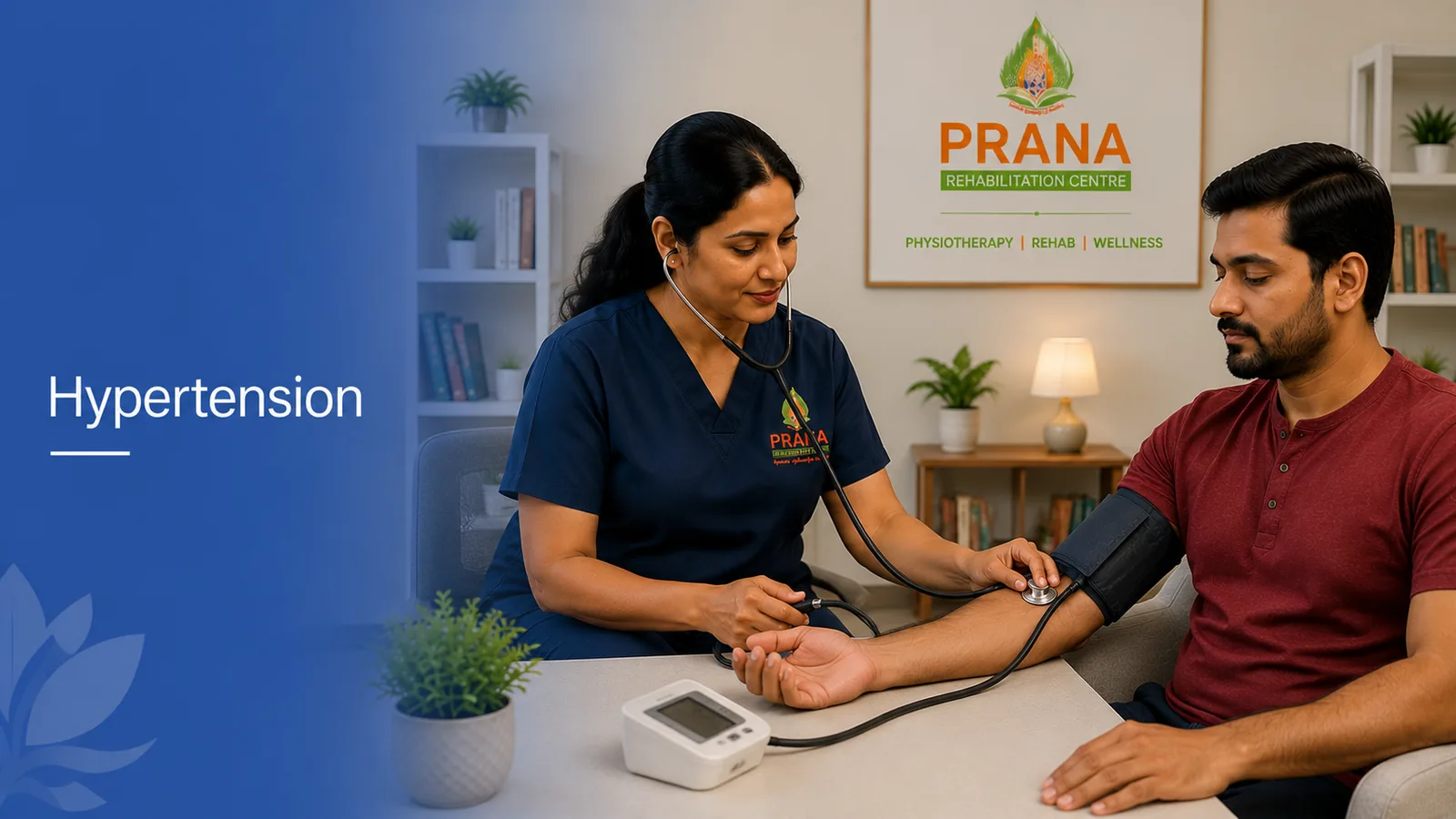
Hypertension (high blood pressure) is a chronic medical condition in which the force of blood against the walls of the arteries remains consistently too high. This is a chronic lifestyle-related health condition that silently affects your heart, brain, kidneys, and blood vessels over time. According to global health data, hypertension is one of the leading causes of preventable death worldwide and significantly increases the risk of heart disease, stroke, kidney failure, vision problems, and cognitive decline. It is estimated that around 1.4 billion adults worldwide are currently living with hypertension, and nearly 1 in 3 adults globally are affected by high blood pressure. Alarmingly, almost half of these individuals are unaware of their condition, which makes it even more dangerous as it often progresses without symptoms. It is known as the “silent killer,” making early detection and structured lifestyle intervention extremely important for long-term health and prevention of complications. At Prana Rehabilitation Centre, we follow a structured Lifestyle Modification (LSM) approach that helps identify the root causes of elevated blood pressure and guide you step-by-step toward sustainable and healthy living, with a strong focus on blood pressure control, cardiovascular protection, and long-term health improvement. 1. Initial Consultation & Patient Assessment Your journey begins with a detailed one-to-one consultation, where we understand your lifestyle, stress levels, and health patterns in depth. This is a supportive discussion focused on identifying “why your blood pressure is elevated” rather than only focusing on BP readings. We assess you’re: • Resting blood pressure (multiple readings) • History of hypertension (new or long-standing) • Dietary patterns • Daily routine and occupational lifestyle • Physical activity level and sedentary behaviour • Sleep quality and duration • Stress levels, emotional health, and coping patterns • Family history of hypertension, stroke, or heart disease • Substance use history This comprehensive evaluation helps us identify the real-life factors contributing to your blood pressure. 2. Body Composition Analysis & Blood Pressure Analysis Next, we perform a detailed body composition analysis & blood pressure evaluation along with cardiovascular risk assessment using standardized clinical methods. This helps us understand the severity and pattern of hypertension. It Evaluates you’re: • Body Weight and Height • Body Fat Percentage • Visceral Fat Level (Fat Around Internal Organs) • Muscle Mass • Metabolic Age Estimation • Body Mass Index (BMI) • Systolic and Diastolic Blood Pressure trends • Resting Heart Rate • Stress-related physiological indicators Blood pressure classification helps us understand whether it is elevated, stage 1, stage 2, or hypertensive crisis risk levels. However, BP readings alone are not enough. Research shows that stress, visceral fat, obesity, and sedentary lifestyle significantly influence long-term hypertension control and cardiovascular risk. Even individuals with mild BP elevation may have higher risk if lifestyle factors remain unaddressed. 3. Risk Stratification & Personalized Guidance After collecting all clinical and lifestyle data, we identify your personalized risk factors contributing to hypertension. Based on this analysis, we classify your cardiovascular risk level, which helps us design a safe intervention plan tailored specifically for you. We support you through: • Personalized dietary modification • Customized physical activity guidance based on your heart health and fitness level • Stress management techniques to reduce sympathetic over activity • Breathing and relaxation techniques to support blood pressure regulation • Meditation for better blood pressure control and improved sleep quality • Behavioural changes to improve long-term adherence and lifestyle control “At Prana Rehabilitation Centre, our goal is blood pressure control and complete cardiovascular lifestyle transformation. We focus on understanding your unique risk factors and guiding you toward sustainable health, stable blood pressure, improved heart function, and long-term well-being through a structured, evidence-based lifestyle modification approach.” “Healthy Pressure, Healthy Heart, Healthy Life.”

Know More
Lifestyle Modification Program for Diabetes Mellitus (DM)
Lifestyle Medicine

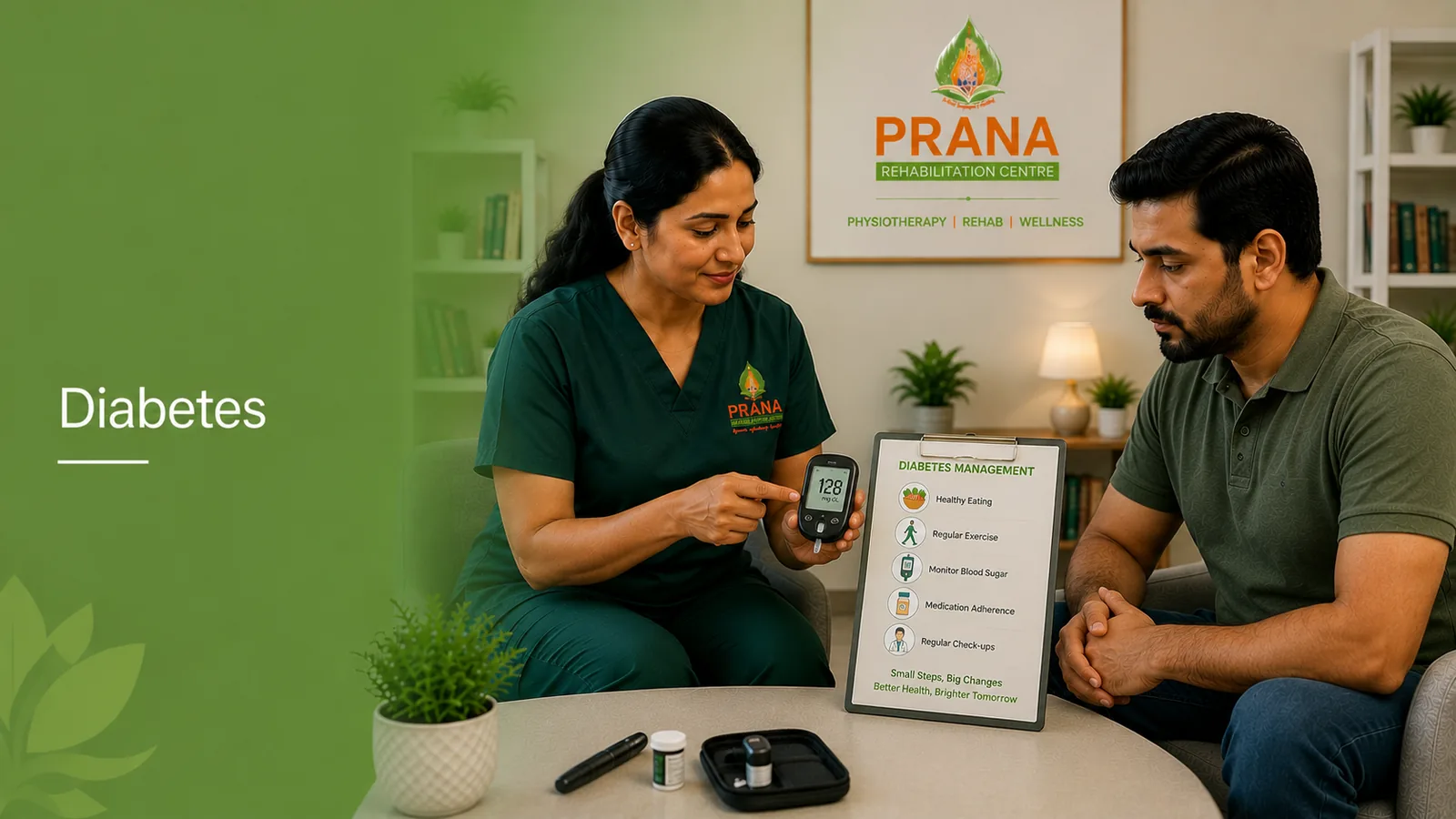
Lifestyle Modification Program for Diabetes Mellitus (DM)

Diabetes mellitus (DM) is a chronic metabolic disorder in which the body is unable to properly regulate blood sugar levels due to insufficient insulin production or ineffective insulin action. According to global health data, diabetes is one of the fastest-growing lifestyle-related diseases worldwide, affecting approximately 830 million adults globally, It is also responsible for over 1.6 million deaths annually.Alarmingly, more than half of people living with diabetes are not receiving proper treatment, increasing the risk of long-term complications. It significantly increases the risk of heart disease, stroke, kidney failure, nerve damage, vision problems, delayed wound healing, and other long-term complications. At Prana Rehabilitation Centre, we follow a structured Lifestyle Modification (LSM) approach that helps identify the root causes of blood sugar imbalance and guides you step-by-step toward sustainable and healthy living, with a strong focus on glucose control, metabolic health, and long-term prevention of diabetes-related complications. 1. Initial Consultation & Patient Assessment Your journey begins with a detailed one-to-one consultation, where we understand your lifestyle and health in depth. This is a supportive discussion focused on identifying “why your blood sugar levels are elevated” rather than only focusing on glucose readings. We assess you’re: • History of diabetes (newly diagnosed or long-standing) • Fasting and post-meal blood sugar levels • Dietary patterns • Daily routine and occupational lifestyle • Physical activity level and sedentary behaviour • Sleep quality and duration • Family history of diabetes or metabolic disorders • Medication history (insulin or oral hypoglycaemic agents) This comprehensive evaluation helps us identify the real-life factors contributing to your blood sugar imbalance. 2. Body Composition & Blood Glucose Analysis Next, we perform a detailed body composition analysis & metabolic assessment to understand your Glycemic control. Unlike a single blood sugar reading, this provides a clearer picture of long-term glucose regulation. Next, we perform a detailed metabolic assessment to understand your Glycemic control and overall metabolic health. Unlike a single blood sugar reading, this provides a clearer picture of long-term glucose regulation. It evaluates you’re: • Body weight and height • Body fat percentage • Visceral fat level (fat around internal organs) • Muscle mass • Metabolic age estimation • Body Mass Index (BMI) • Fasting blood glucose levels • Postprandial (post-meal) blood glucose levels • HbA1c (average 3-month blood sugar control) BMI and waist circumference help identify metabolic risk factors & HbA1c is used as a key marker to assess long-term glucose control. Research shows that poor diet, inactivity, obesity, stress, and irregular sleep patterns significantly worsen insulin resistance and blood sugar control. 3. Risk Stratification & Personalized Guidance After collecting all clinical and lifestyle data, we identify your personalized risk factors contributing to diabetes. Based on this analysis, we classify your metabolic risk level, which helps us design a focused and safe intervention plan tailored specifically for you. We support you through: • Personalized dietary modification • Customized physical activity guidance • Yogasana practices to support metabolic regulation • Mudras that may help improve insulin sensitivity. We also estimate your daily carbohydrate intake patterns and identify key dietary triggers affecting blood sugar fluctuations. At Prana Rehabilitation Centre, our goal is blood sugar control and complete metabolic lifestyle transformation. We focus on understanding your unique risk factors and guiding you toward sustainable health, stable glucose levels, improved metabolic function, and long-term well-being through a structured, evidence-based lifestyle modification approach.” “Live Better Beyond Diabetes.”

Know More
Lifestyle Modification Program for Dyslipidemia
Lifestyle Medicine

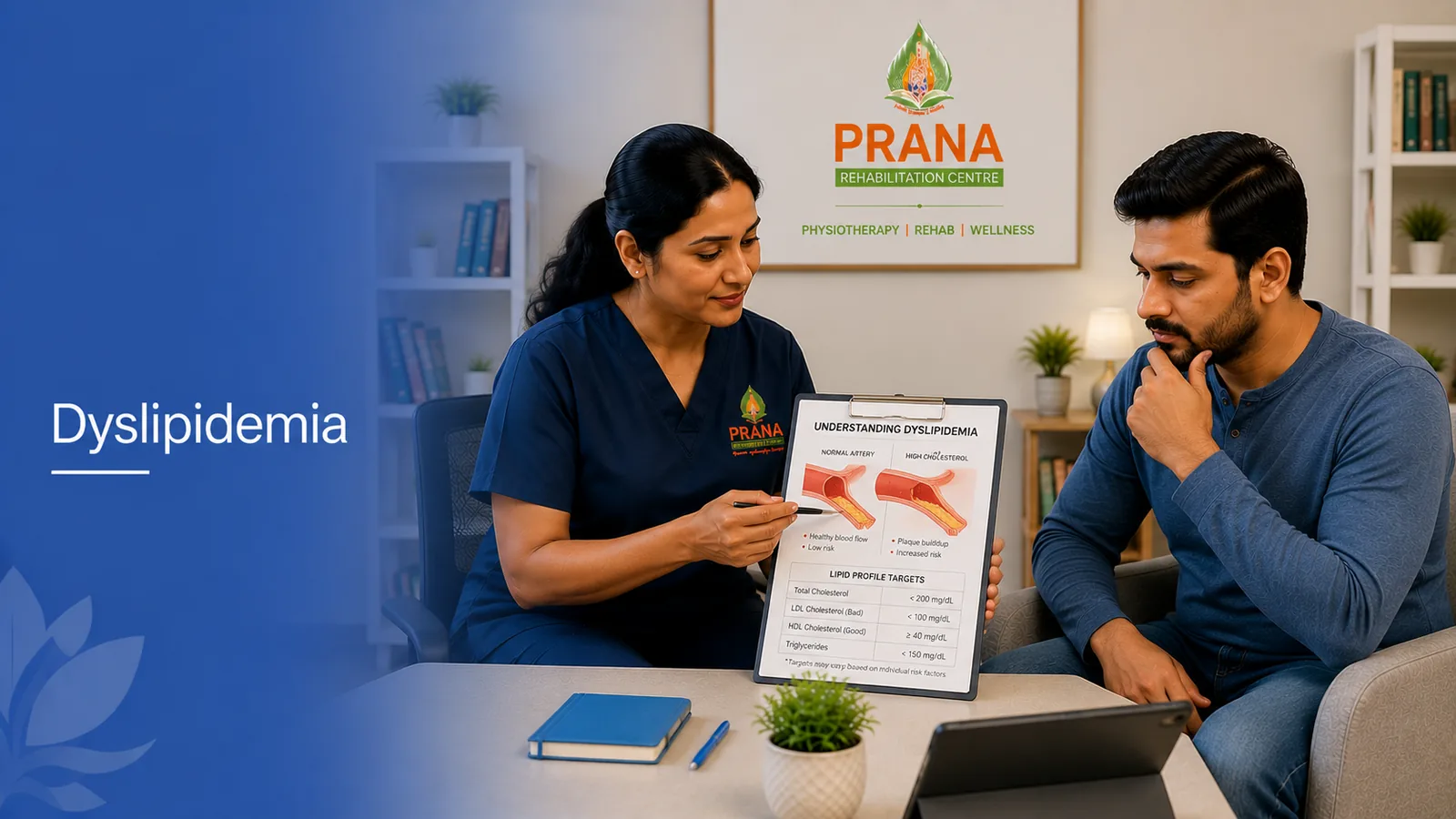
Lifestyle Modification Program for Dyslipidemia

Dyslipidemia is a metabolic condition in which the levels of fats in the blood become abnormal, including high cholesterol, high triglycerides, high LDL (“bad cholesterol”), or low HDL (“good cholesterol”). It is a complex lifestyle-related metabolic condition that affects your heart, blood vessels, and overall cardiovascular health over time. According to global health statistics, elevated cholesterol contributes to approximately 4.4 million deaths annually worldwide, and nearly 39% of adults globally have raised total cholesterol levels. Research also shows that elevated LDL cholesterol is one of the major modifiable risk factors for heart attack, stroke, and atherosclerosis. At Prana Rehabilitation Centre, we follow a structured Lifestyle Modification (LSM) approach that helps identify the root causes of lipid imbalance and metabolic dysfunction, and guide you step-by-step toward sustainable and healthy living, with a strong focus on cardiovascular protection, metabolic balance, and long-term wellness. 1. Initial Consultation & Patient Assessment Your journey begins with a detailed one-to-one consultation, where we understand your lifestyle and health in depth. This is a supportive discussion focused on identifying “why your lipid imbalance is happening” rather than only focusing on cholesterol values. We assess your: • Medical history and existing health conditions • History of hypertension, diabetes, obesity, or cardiovascular disease • Lipid profile status (cholesterol and triglyceride levels) • Dietary patterns and fat intake habits • Daily routine and occupational lifestyle • Physical activity level and sedentary behaviour • Sleep quality and duration • Family history of dyslipidemia or heart disease • Medication history (if any) This comprehensive evaluation helps us identify the real-life factors contributing to dyslipidemia. 2. Lipid & Body Composition Analysis Next, we perform a detailed lipid and metabolic assessment using standardized clinical evaluation methods. Unlike a single cholesterol reading, this provides a deeper understanding of your cardiovascular and metabolic health. It evaluates your: • Total cholesterol levels • LDL (low-density lipoprotein) levels • HDL (high-density lipoprotein) levels • Triglyceride levels • Body weight and height • Body fat percentage • Visceral fat level (fat around internal organs) • Body Mass Index (BMI) • Waist circumference and abdominal obesity risk These assessments are extremely important because individuals with similar body weight may have completely different cardiovascular risks based on their lipid profile and visceral fat levels. Research shows that elevated LDL and triglycerides are strongly associated with increased risk of heart disease, stroke, and metabolic disorders. 3. Risk Stratification & Personalized Guidance After collecting all clinical and lifestyle data, we identify your personalized risk factors contributing to dyslipidemia. Based on this analysis, we classify your cardiovascular and metabolic risk level, which helps us design a focused and safe intervention plan tailored specifically for you. This approach focuses on long-term correction rather than temporary cholesterol reduction. We support you through: • Structured nutrition planning to improve cholesterol balance and heart health • Individualized exercise recommendations based on your health condition and endurance level • Lifestyle strategies focused on reducing abdominal and visceral fat accumulation • Relaxation and stress reduction techniques to support cardiovascular wellness • Healthy sleep management strategies • Habit-building approaches for sustainable long-term lifestyle improvement • Identification of dietary and lifestyle factors contributing to lipid imbalance “At Prana Rehabilitation Centre, our goal is lipid control and complete cardiovascular lifestyle transformation. We focus on understanding your unique challenges and guiding you toward sustainable health, improved cholesterol balance, better metabolism, and long-term well-being through a structured, evidence-based lifestyle modification approach.” “Healthy Fats, Healthy Heart.”

Know More
Obesity Lifestyle Modification Program
Lifestyle Medicine

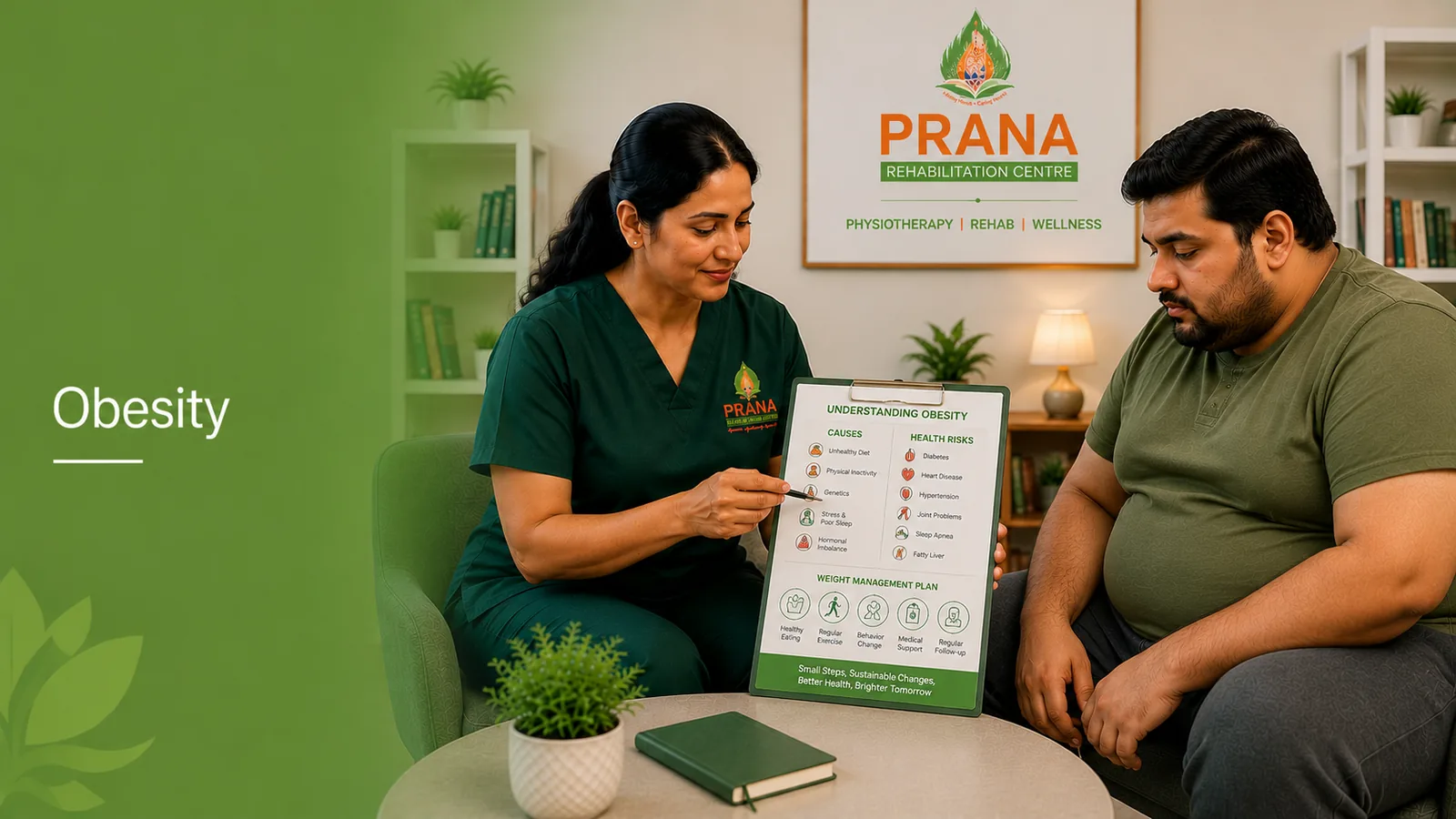
Obesity Lifestyle Modification Program

Obesity is not just an increase in body weight it is a complex lifestyle-related health condition that affects how you feel, move, think, and live every day. According to global health data, obesity has nearly tripled worldwide in recent decades, and it is now one of the leading preventable risk factors for chronic diseases. It significantly increases your risk of type 2 diabetes, hypertension, heart disease, stroke, fatty liver disease, joint problems, sleep disorders, cancer and hormonal imbalance. This makes early identification and structured lifestyle intervention extremely important for your long-term health. At Prana Rehabilitation Centre, we follow a structured Lifestyle Modification (LSM) approach that helps identify the root causes of your weight gain and metabolic imbalance, and guide you step-by-step toward sustainable and healthy living, with a strong focus on prevention of lifestyle diseases and promotion of long-term health and longevity. 1. Initial Consultation & Patient Assessment Your journey begins with a detailed one-to-one consultation, where we understand your lifestyle and health in depth. This is a supportive discussion focused on identifying “why your weight gain is happening” rather than just focusing on the number on the scale. We assess you’re: • Medical history and current health conditions • Dietary patterns and eating behaviour • Daily routine and occupational lifestyle • Sleep quality and duration • Physical activity level • Stress, emotional health, and coping patterns • Family history of metabolic disorders • Medication history (if any) This comprehensive evaluation helps us identify the real-life factors contributing to your weight gain. 2. Body Composition Analysis Next, we perform a detailed body composition analysis using a specialized weighing system. Unlike simple body weight measurement, this provides a deeper understanding of your metabolic health. It Evaluates you’re: • Body Weight and Height • Body Fat Percentage • Visceral Fat Level (Fat Around Internal Organs) • Muscle Mass • Metabolic Age Estimation • Body Mass Index (BMI) BMI is used as an initial screening tool to categorize obesity levels, while body composition analysis gives a more accurate picture of your internal health. But These above mentioned steps are most important because two individuals with the same weight may have completely different health risks. Research shows that excess visceral fat is strongly linked to increased risk of diabetes and cardiovascular disease, even if your body weight appears normal. 3. Risk Stratification & Personalized Guidance After collecting all clinical and lifestyle data, we identify your personalized risk factors contributing to obesity. Based on this analysis, we classify your health risk level, which helps us design a focused and safe intervention plan for you. Based on this, a structured and individualized lifestyle plan is designed. This approach focuses on long-term correction rather than short-term weight loss. We support you through: • Personalized dietary modification (balanced and sustainable eating habits) • Physical activity guidance suited to your condition and capacity • Sleep regulation strategies to improve recovery and metabolism • Stress management techniques to reduce emotional eating and hormonal imbalance • Behavioural changes to build long-term healthy habits • We estimate your average daily calorie intake. “At Prana Rehabilitation Centre, our goal is not just weight reduction—it is complete lifestyle transformation. We focus on understanding your unique challenges and guiding you toward sustainable health, improved metabolism, long-term well-being & Fitness through a structured, evidence-based lifestyle modification approach.” “Transform Your Lifestyle, Not Just Your Weight.”

Know More
Metabolic Syndrome Lifestyle Modification Program
Lifestyle Medicine

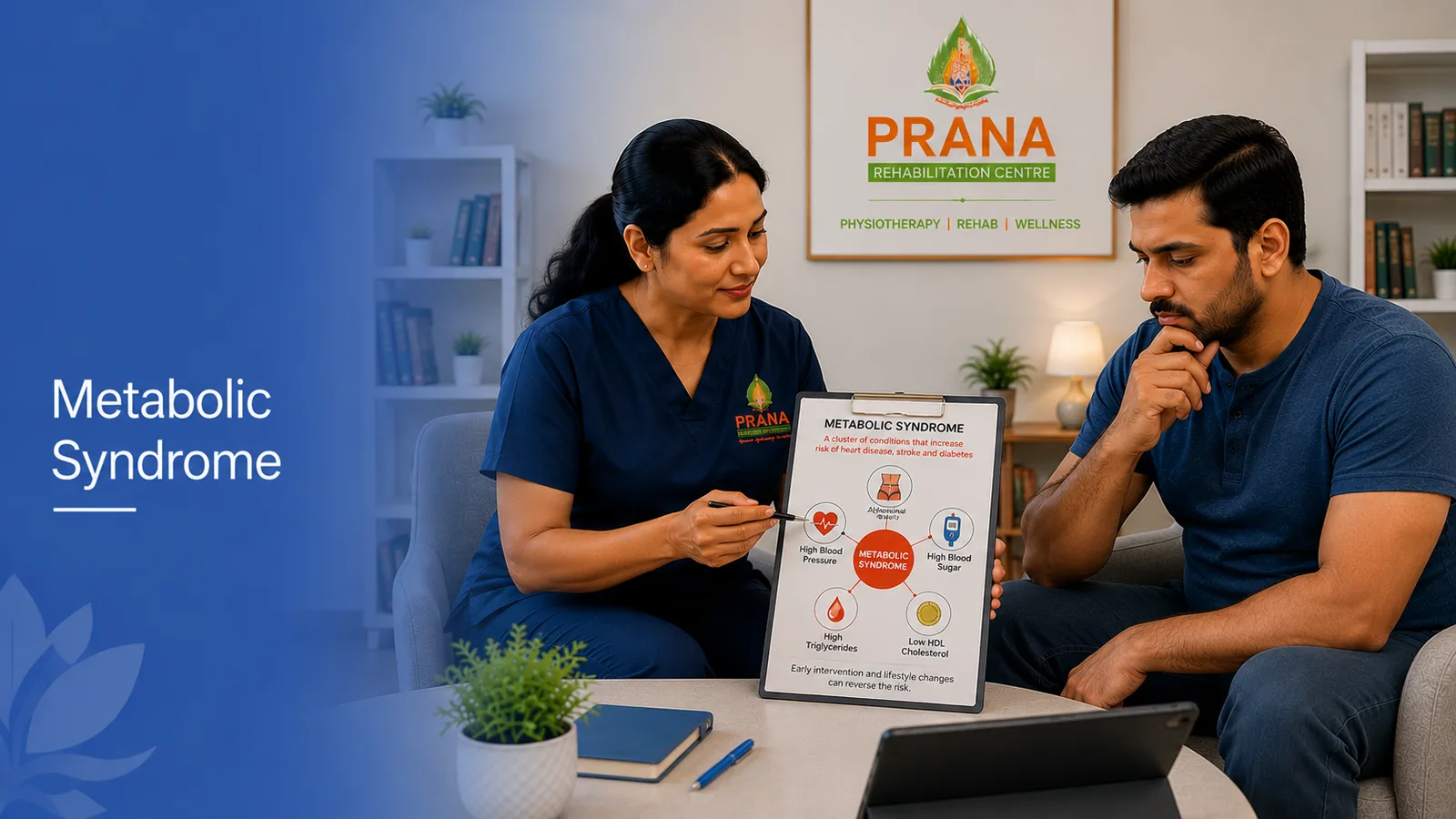
Metabolic Syndrome Lifestyle Modification Program

Metabolic syndrome is a group of interconnected health conditions that occur together, including high blood pressure, high blood sugar, abnormal cholesterol levels, excess abdominal fat, and insulin resistance. According to global health estimates, nearly 1 in 4 adults worldwide may be affected by metabolic syndrome, largely due to sedentary lifestyle, unhealthy diet, stress, and obesity. Because these conditions often develop silently over time, early identification and structured lifestyle intervention are extremely important for long-term health and prevention of serious complications. At Prana Rehabilitation Centre, we follow a structured Lifestyle Modification (LSM) approach that helps identify the root causes of metabolic imbalance and guides you step-by-step toward sustainable and healthy living, with a strong focus on improving metabolism, cardiovascular health, insulin sensitivity, and overall well-being. 1. Initial Consultation & Patient Assessment Your journey begins with a detailed one-to-one consultation, where we understand your lifestyle and health in depth. This is a supportive discussion focused on identifying “why metabolic imbalance is developing” rather than only focusing on symptoms or lab values. We assess your: • Medical history and existing lifestyle disorders • Dietary patterns and eating behaviour • Daily routine and occupational lifestyle • Physical activity level and sedentary behaviour • Sleep quality and duration • Stress levels, emotional health, and coping patterns • Family history of diabetes, hypertension, obesity, or heart disease • Medication history (if any) This comprehensive evaluation helps us identify the real-life factors contributing to metabolic dysfunction. 2. Body Composition & Metabolic Analysis Next, we perform a detailed metabolic and body composition assessment using standardized clinical evaluation methods. Unlike routine weight measurement alone, this provides a deeper understanding of your internal metabolic health. It evaluates your: • Body weight and height • Body Mass Index (BMI) • Waist circumference and abdominal obesity risk • Body fat percentage • Visceral fat level (fat around internal organs) • Blood pressure trends • Fasting blood glucose levels • HbA1c (average blood sugar control) • Lipid profile indicators (cholesterol and triglyceride levels) These assessments help us identify the severity of metabolic risk. Research shows that excess visceral fat and insulin resistance are strongly associated with diabetes, cardiovascular disease, and long-term metabolic complications even before symptoms become noticeable. 3. Risk Stratification & Personalized Guidance After collecting all clinical and lifestyle data, we identify your personalized risk factors contributing to metabolic syndrome. Based on this analysis, we classify your metabolic and cardiovascular risk level, which helps us design a focused and safe intervention plan tailored specifically for you. We support you through: • Personalized dietary modification • Customized physical activity guidance • Weight management strategies • Yogasana & Mudras practices to support metabolic regulation • Stress management and relaxation techniques • Sleep regulation strategies “At Prana Rehabilitation Centre, our goal is metabolic control and complete lifestyle transformation. We focus on understanding your unique risk factors and guiding you toward sustainable health, improved metabolism, better energy levels, and long-term well-being through a structured, evidence-based lifestyle modification approach.” “Small Lifestyle Changes, Big Health Benefits.”

Know More
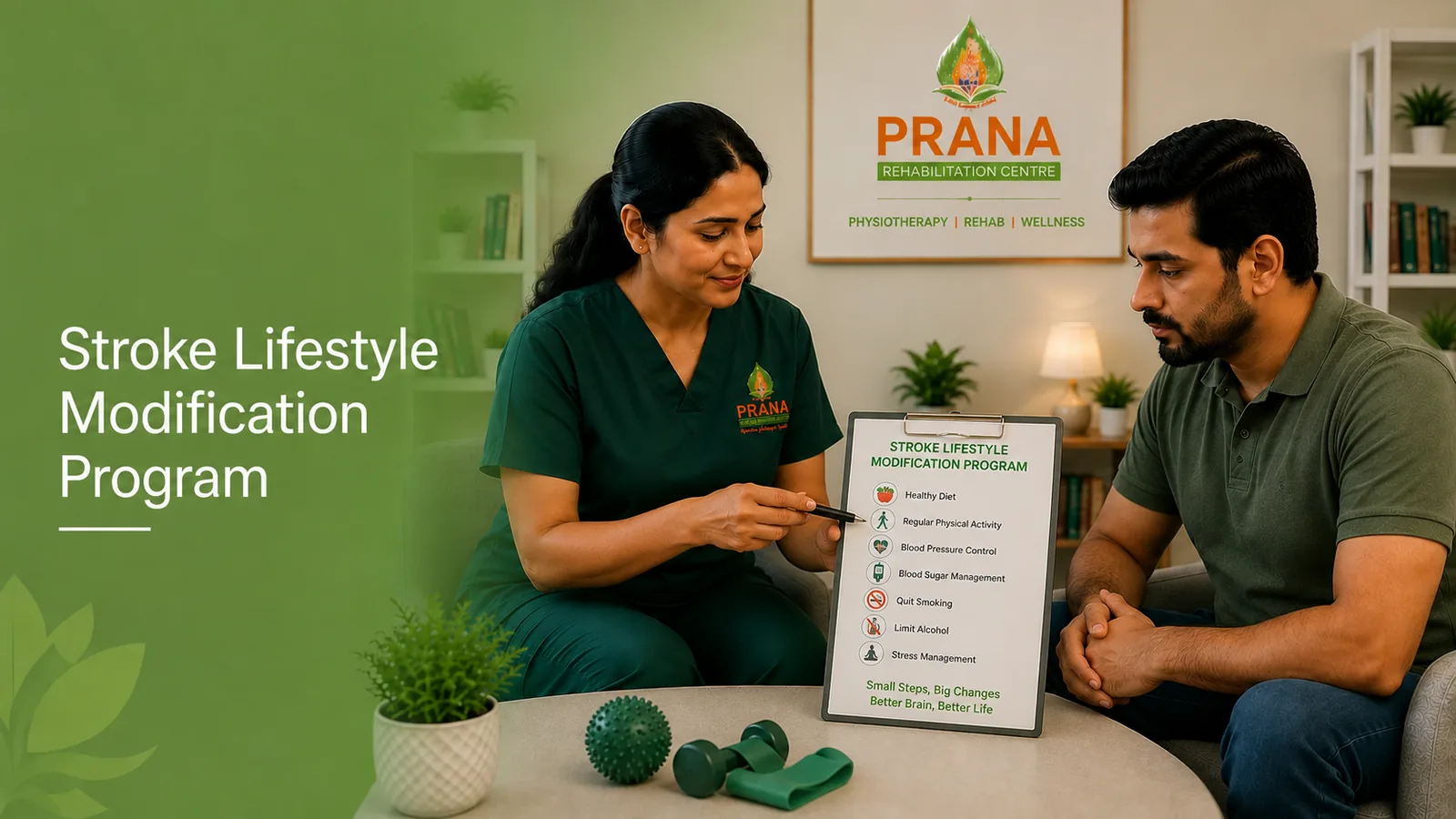
Stroke Lifestyle Modification Program
Lifestyle Medicine

Stroke Lifestyle Modification Program

Stroke is not just a sudden neurological event it is a serious health condition that occurs when the blood supply to the brain is interrupted, leading to damage of brain cells and loss of neurological function. Stroke can affect movement, speech, memory, balance, swallowing, emotions, and overall quality of life. According to global health statistics, stroke is one of the leading causes of disability and death worldwide, affecting more than 12 million people every year, with nearly 1 in 4 adults at risk of experiencing a stroke during their lifetime. Major lifestyle-related risk factors such as hypertension, diabetes, obesity, dyslipidemia, smoking, stress, physical inactivity, and poor dietary habits significantly increase the risk of stroke. Research shows that early lifestyle intervention and risk factor management can greatly reduce the chances of recurrent stroke and long-term neurological complications. long-term brain health. At Prana Rehabilitation Centre, we follow a structured Lifestyle Modification (LSM) approach that helps identify the root causes and lifestyle-related risk factors contributing to stroke and guides you step-by-step toward sustainable recovery, improved function, and long-term neurological wellness. 1. Initial Consultation & Patient Assessment Your journey begins with a detailed one-to-one consultation, where we understand your medical condition, lifestyle, and recovery challenges in depth. This is a supportive discussion focused on identifying “why stroke risk developed” and how lifestyle factors may influence recovery and future prevention. We assess your: • Medical history and current neurological condition • History of hypertension, diabetes, dyslipidemia, or heart disease • Dietary patterns and eating behaviour • Daily routine and occupational lifestyle • Physical activity level and mobility status • Sleep quality and duration • Stress, emotional health, and coping patterns • Family history of stroke or cardiovascular disease • Medication history and rehabilitation status This comprehensive evaluation helps us identify the real-life factors contributing to stroke risk and delayed recovery. 2. Neurological & Functional Health Analysis Next, we perform a detailed assessment to understand your overall neurological, cardiovascular, and metabolic health status. Unlike symptom-based evaluation alone, this provides a broader understanding of your functional recovery and stroke-related risk profile. It evaluates your: • Blood sugar and metabolic status • Lipid profile indicators • Body weight and Body Mass Index (BMI) • Balance and mobility status • Body weight and height • Body Mass Index (BMI) • Waist circumference and abdominal obesity risk • Body fat percentage • Visceral fat level (fat around internal organs) These assessments are important because stroke recovery is influenced not only by neurological damage but also by cardiovascular fitness, metabolic health, stress levels, and lifestyle habits. Research shows that uncontrolled hypertension and sedentary lifestyle are among the strongest predictors of recurrent stroke. 3. Risk Stratification & Personalized Guidance After collecting all clinical and lifestyle data, we identify your personalized stroke-related risk factors. Based on this analysis, we classify your neurological and cardiovascular risk level, which helps us design a focused and safe lifestyle intervention plan tailored specifically for you. We support you through: • Personalized lifestyle guidance to support neurological and cardiovascular recovery • Tailored movement and rehabilitation-based activity planning according to your functional status • Mind-body relaxation techniques to improve emotional balance and reduce stress • Therapeutic breathing practices to support circulation and overall wellness • Sleep improvement strategies to promote brain healing and recovery • Healthy routine development for sustainable long-term lifestyle management • Education and preventive strategies to lower the risk of future stroke-related complications “At Prana Rehabilitation Centre, our goal is neurological recovery and complete lifestyle transformation. We focus on understanding your unique challenges and guiding you toward improved function, better cardiovascular health, enhanced recovery, and long-term well-being through a structured, evidence-based lifestyle modification approach.” “Recover Stronger, Live Healthier.”
Know More

Frequently Asked Questions

What conditions can naturopathy help treat?

Naturopathy may help with stress, obesity, digestive issues, pain management, detoxification, and lifestyle disorders.

What therapies are used in naturopathy?

Common therapies include hydrotherapy, mud therapy, massage, yoga, diet therapy, and detox treatments.

Are medicines used in naturopathy treatment?

Naturopathy mainly focuses on natural healing methods without heavy medication.

Is diet important in naturopathy?

Yes, healthy nutrition and lifestyle changes are key parts of naturopathy treatment.

Do you offer personalized naturopathy plans?

Yes, treatment plans are customized based on individual health needs.

Is yoga included in naturopathy treatment?

Yes, yoga and breathing exercises are often included for holistic healing.

Can naturopathy help with detoxification?

Yes, detox therapies help remove toxins and improve body function naturally.

How can I book a naturopathy consultation?

You can download mobile app from store or contact Prana Rehab through phone/WhatsApp +91 944 272 4890, or the website (https://pranarehabtrichy.com/) to schedule an appointment.

Related Articles

Pain Rehabilitation
Pain Rehabilitation

Pain Management Pain is one of the most common health concerns affecting people of all ages. It may arise due to poor posture, injury, muscle …

Stress Management
Stress Management

Stress Management: Finding Balance in a Busy World Why Stress Has Become So Common ? In today’s fast-paced lifestyle, stress has quietly become a part …

Diet Therapy
Diet Therapy

"மருந்தென வேண்டாவாம் யாக்கைக்கு அருந்தியது அற்றது போற்றி உணின்" Diet plays a vital role in maintaining good health, preventing illness, and supporting recovery. It is not merely …

View All Blogs