“Recover Faster with Our Advanced Rehab Programs” Explore Programs

Showing treatments for Integrated Approach

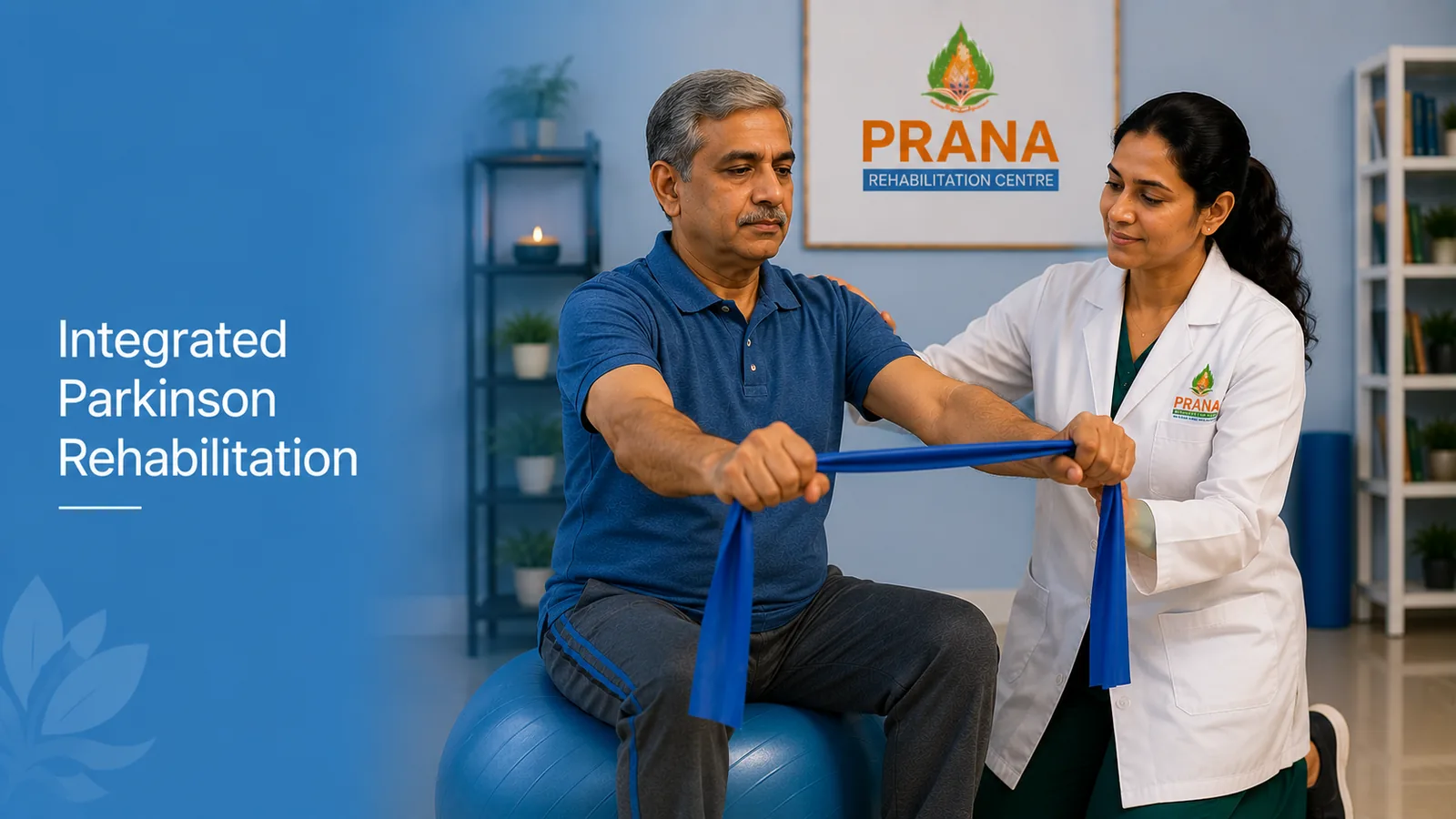
Integrated Parkinson Rehabilitation
Integrated Approach

Integrated Parkinson Rehabilitation

Parkinson's disease is a progressive neurological condition that affects movement, balance, coordination, posture, speech, and sometimes cognition and emotional well-being. Millions of people worldwide live with Parkinson's disease, and while the condition progresses over time, early and consistent rehabilitation can significantly improve mobility, independence, safety, and overall quality of life. At Prana Rehabilitation Centre, we provide an integrated Parkinson's rehabilitation program designed to help individuals manage symptoms, maintain functional abilities, and continue leading active and meaningful lives. Our patient-centred rehabilitation approach combines advanced neuro-rehabilitation techniques with holistic supportive care to address physical, functional, emotional, and psychological needs. Our Comprehensive Parkinson's Rehabilitation Program Includes Physiotherapy for movement, strength, flexibility, and posture Gait and balance training for safer mobility Functional movement and coordination exercises Occupational therapy for independence in daily activities Speech and swallowing therapy for voice clarity and swallowing difficulties Cueing strategies and rhythmic movement training Freezing management techniques and adaptive movement strategies Strengthening and flexibility exercises Psychological rehabilitation and emotional support Fall prevention and safety training Naturopathy support including yoga therapy, pranayama (breathing exercises), meditation, relaxation techniques, and gentle mind-body practices to improve flexibility, reduce stress, and enhance overall well-being Our rehabilitation specialists focus on improving walking patterns, reducing stiffness, enhancing posture, increasing movement amplitude, and supporting smoother and safer movement during daily activities. Task-specific exercises and movement retraining techniques help individuals perform routine activities with greater confidence, control, and efficiency. Psychological Support and Caregiver Involvement As part of our integrated approach, we provide psychological rehabilitation focused on emotional well-being, stress management, confidence building, and improving self-motivation. Individuals with Parkinson's disease may experience anxiety, depression, frustration, social withdrawal, or reduced confidence due to movement difficulties. Through psychoeducation, counselling, caregiver guidance, and family support, we help patients and families better understand the condition and adapt positively to long-term management. Risk Reduction and Holistic Support Our rehabilitation team emphasizes risk reduction strategies aimed at reducing falls, improving home safety, managing fatigue, maintaining physical activity, and supporting healthy lifestyle habits. To support holistic healing, we integrate naturopathy-based supportive care including acupressure, therapeutic massage, yoga therapy, pranayama (breathing exercises), relaxation techniques, mudra practices, and personalized diet guidance — helping improve flexibility, circulation, relaxation, stress regulation, and overall physical and emotional well-being. Each rehabilitation program is individualized according to the person's symptoms, stage of condition, functional abilities, and personal goals. Benefits of Parkinson's Rehabilitation Improves movement speed and movement amplitude Reduces muscle rigidity, stiffness, and tremor-related difficulties Enhances balance, posture, and walking stability Reduces the risk of falls and mobility-related injuries Improves coordination and motor control Supports safer and more independent daily functioning Helps manage freezing episodes and movement difficulties Enhances speech clarity and swallowing function Promotes emotional well-being, confidence, and motivation Provides psychoeducation, caregiver guidance, and family support Encourages healthy lifestyle habits and risk reduction strategies Supports holistic healing through yoga, acupressure, pranayama, mudra, and diet guidance Improves overall quality of life and functional independence "We help individuals with Parkinson's disease move with greater ease, stability, confidence, and independence through compassionate, integrated, and patient-centered rehabilitation care."
Know More
Integrated Stroke Rehabilitation
Integrated Approach

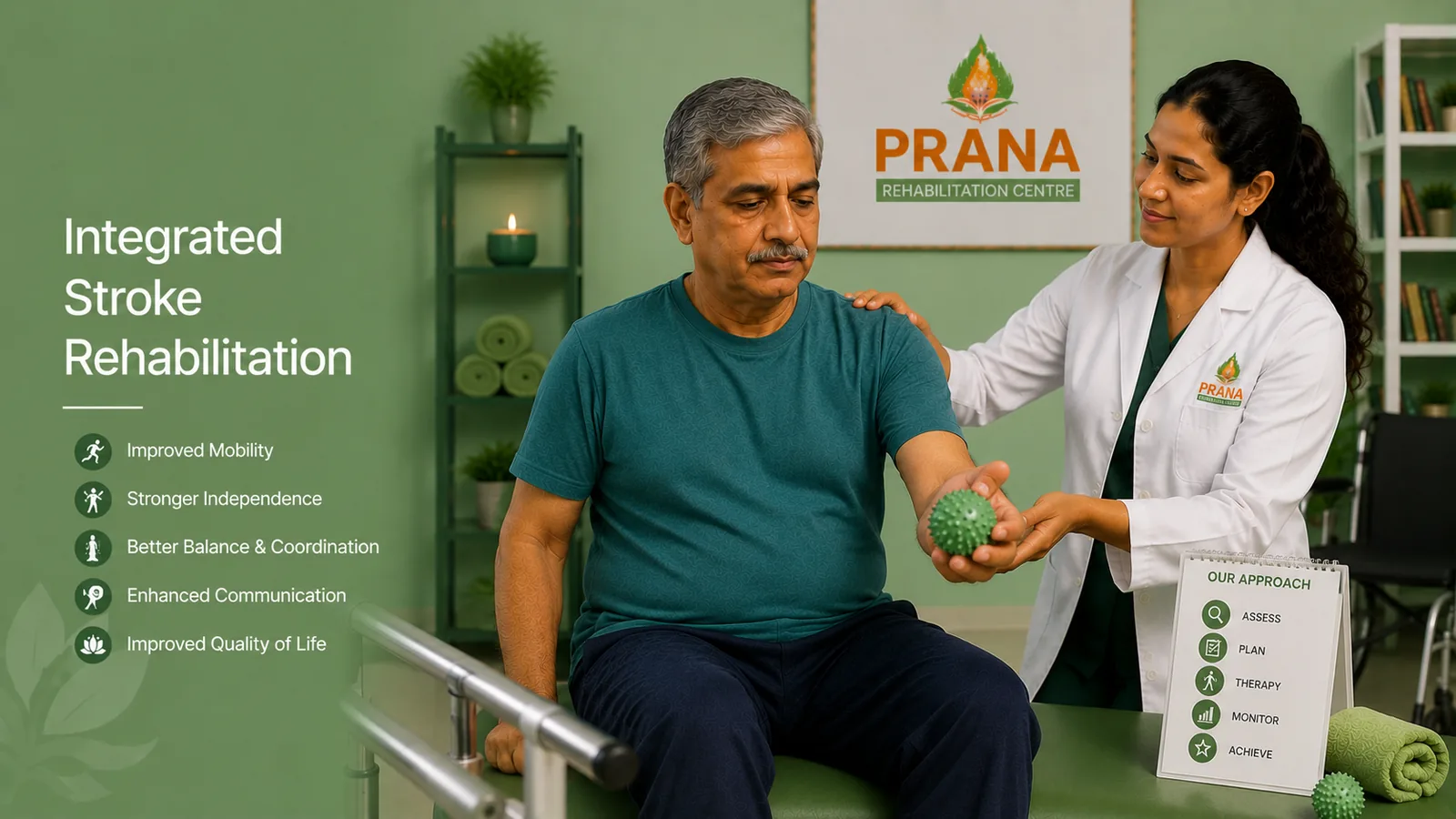
Integrated Stroke Rehabilitation

Stroke is one of the leading causes of long-term disability worldwide, affecting millions of individuals every year. Studies show that nearly 1 in 4 people are at risk of stroke during their lifetime, and many stroke survivors experience difficulties with movement, speech, balance, memory, emotions, and daily activities. Early and comprehensive rehabilitation plays a vital role in improving recovery, reducing disability, and helping individuals regain independence and quality of life. At Prana Rehabilitation Centre, we provide comprehensive and integrated stroke rehabilitation programs designed to help individuals regain strength, confidence, independence, and quality of life. Our team focuses on personalized care, combining modern neuro-rehabilitation techniques with holistic healing approaches to support complete recovery. Our Integrated Stroke Rehabilitation Program Includes Physiotherapy for strength, movement, balance, and mobility Occupational therapy to improve daily living skills and independence Speech and language therapy for communication and swallowing difficulties Cognitive rehabilitation for memory, attention, and problem-solving skills Psychological rehabilitation for emotional recovery and mental well-being Gait and balance training to improve safe walking and reduce fall risk Stress management and relaxation techniques Naturopathy-based supportive care including yoga therapy, acupressure, mudra practices, and personalized diet guidance We understand that stroke recovery can be physically and emotionally challenging — not only for patients, but also for families and caregivers. That is why our integrated approach includes psychoeducation, family counselling, caregiver guidance, and emotional support to help everyone better understand the recovery journey and participate actively in the healing process. Our rehabilitation specialists also focus on stroke risk reduction protocols and lifestyle modification to help prevent complications and reduce the chances of recurrent stroke. Through guided exercises, therapeutic activities, healthy lifestyle education, and home rehabilitation programs, we support continuous improvement both inside and outside the rehabilitation centre. At Prana Rehabilitation Centre, we believe recovery is possible with the right support, consistency, and compassionate care. Our goal is to help every individual regain confidence, improve functional independence, and return to daily life with greater safety, comfort, and dignity. Benefits of Our Integrated Stroke Rehabilitation Program Improves muscle strength and movement Enhances balance, coordination, and walking ability Helps regain independence in daily activities Improves speech, communication, and swallowing function Supports memory, concentration, and cognitive skills Promotes emotional well-being and confidence Reduces stress, anxiety, and fear after stroke Provides family support and caregiver training Encourages healthy lifestyle habits and stroke prevention Supports holistic healing through yoga, acupressure, mudra therapy, and diet guidance Encourages safer, faster, and more effective recovery outcomes "We help stroke survivors rebuild strength, restore independence, and regain confidence through compassionate and integrated rehabilitation care."

Know More
Integrated Facial Palsy (Bell’s Palsy) Rehabilitation
Integrated Approach

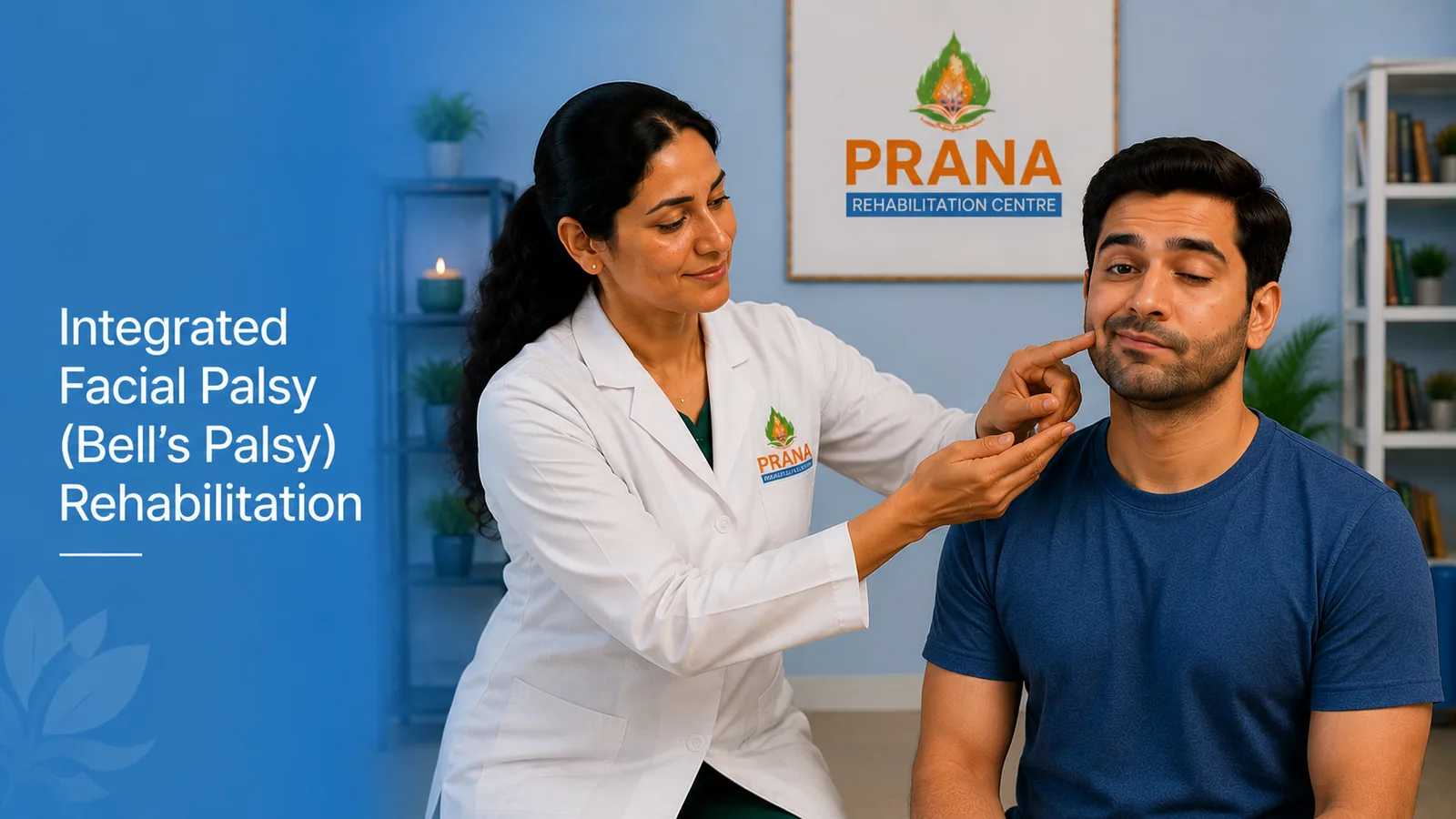
Integrated Facial Palsy (Bell’s Palsy) Rehabilitation

Facial palsy, including Bell's palsy, is a condition that causes sudden weakness or paralysis of the facial muscles, affecting facial expressions, speech, eye closure, eating, and emotional expression. Studies suggest that most individuals with Bell's palsy show significant improvement with early rehabilitation and consistent therapy — making timely intervention and guided rehabilitation essential for better recovery outcomes. At Prana Rehabilitation Centre, we provide an integrated facial palsy rehabilitation program focused on restoring natural facial movement, improving muscle coordination, rebuilding confidence, and enhancing overall well-being. Our rehabilitation approach combines modern therapeutic techniques with holistic supportive care to promote faster and more effective recovery. Our Facial Palsy Rehabilitation Program Includes Specialized facial muscle exercises Neuromuscular re-education therapy Facial massage therapy Electrical stimulation therapy Facial coordination and symmetry training Eye closure and lip movement training Speech and functional facial movement exercises Psychological rehabilitation and emotional support Acupressure techniques and relaxation therapy Treatment is individualized based on the severity of facial weakness and stage of recovery. Patients are guided through targeted facial exercises such as smiling, eyebrow raising, lip control, blinking, and controlled facial expressions to improve facial nerve function, muscle activation, and facial symmetry. Psychological Support and Confidence Building As part of our integrated rehabilitation approach, we provide psychological support focused on enhancing self-image, rebuilding self-confidence, reducing social anxiety, and improving emotional adjustment. Many individuals with facial palsy experience emotional stress, self-consciousness, and reduced confidence due to changes in facial appearance and expressions. Our rehabilitation team supports patients through counselling, psychoeducation, stress management, and confidence-building strategies to help them return comfortably to social, personal, and professional activities. Facial Care Education and Risk Reduction We focus on facial care education and risk reduction strategies to help minimize complications such as facial stiffness, muscle tightness, eye-related problems, and unwanted involuntary facial movements (synkinesis). Family education and supportive guidance are included to encourage positive recovery and emotional support at home. At Prana Rehabilitation Centre, we integrate naturopathy-based supportive care including facial acupressure, yoga therapy for facial relaxation, pranayama (breathing exercises), mudra practices, stress management, and personalized diet guidance. These therapies help support nerve healing, improve circulation, reduce tension, and enhance the body's natural recovery process. Benefits of Facial Palsy Rehabilitation Supports faster recovery of facial nerve function Improves facial symmetry and natural appearance Restores facial muscle strength and coordination Enhances smiling, blinking, and eyebrow movement Reduces facial stiffness, tightness, and discomfort Improves eye closure and reduces dryness-related complications Enhances speech clarity, chewing, and eating ability Helps reduce synkinesis — involuntary facial movements Improves blood circulation and nerve stimulation Enhances self-image, confidence, and emotional well-being Reduces social anxiety and improves emotional adjustment Provides education and risk reduction strategies for better recovery Supports holistic healing through yoga, acupressure, mudra, pranayama, and diet guidance Improves overall quality of life and social interaction "We help individuals restore natural facial movement, rebuild expression, confidence, and emotional well-being — bringing back comfort in every smile."

Know More
Guillain-Barre Syndrome (GBS) Rehabilitation
Integrated Approach

Guillain-Barre Syndrome (GBS) Rehabilitation

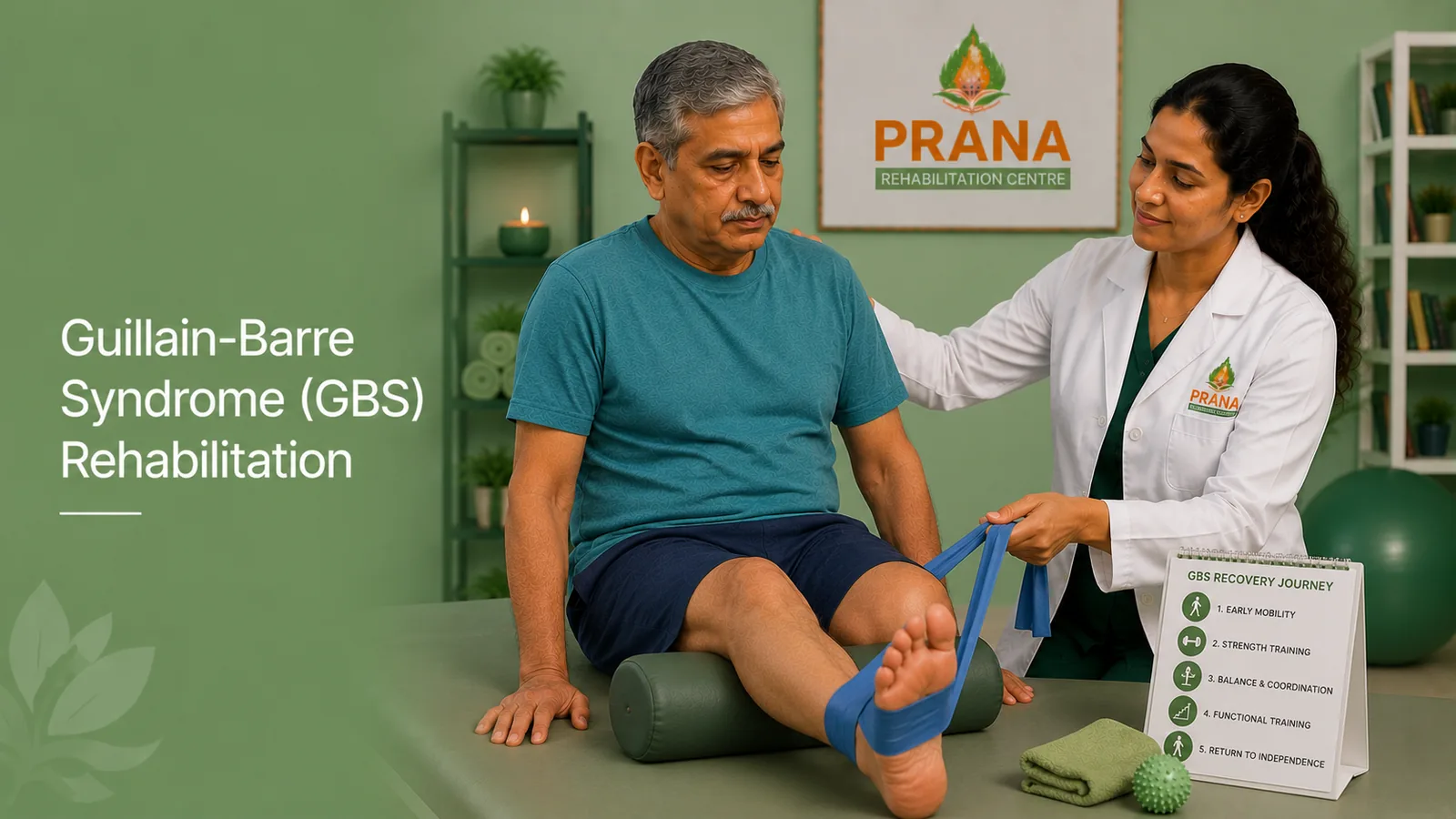
Guillain-Barré Syndrome (GBS) is a rare neurological condition in which the body's immune system attacks the peripheral nerves, leading to muscle weakness, numbness, balance problems, and in severe cases, paralysis. Recovery from GBS can take weeks to months, and early, structured rehabilitation plays a vital role in improving strength, mobility, independence, and overall quality of life. At Prana Rehabilitation Centre, we provide an integrated GBS rehabilitation program designed to support physical, functional, emotional, and psychological recovery. Our multidisciplinary approach combines advanced neuro-rehabilitation techniques with holistic supportive care to help individuals regain strength, confidence, and independence safely and effectively. Our GBS Rehabilitation Program Includes Physiotherapy for muscle strengthening and mobility improvement Range of motion and flexibility exercises Gait and balance training Occupational therapy for daily living skills and functional independence Neuromuscular re-education and coordination training Respiratory exercises and endurance training Fatigue management and energy conservation techniques Psychological rehabilitation and emotional support Functional training for safe movement and transfers Home exercise and caregiver guidance programs Treatment plans are individualized based on the severity of weakness, recovery stage, endurance level, and functional goals. Our rehabilitation team focuses on gradually improving muscle strength, posture, balance, coordination, walking ability, and overall physical function while preventing complications related to prolonged weakness and immobility. Psychological Support and Family Involvement As part of our integrated rehabilitation approach, we provide psychological support focused on emotional adjustment, stress management, confidence building, and enhancing self-motivation during recovery. Individuals recovering from GBS may experience fear, frustration, anxiety, or emotional stress due to sudden weakness and dependency. Through psychoeducation, counselling, family support, and caregiver guidance, we help patients and families better understand the recovery journey and maintain a positive rehabilitation environment. Risk Reduction and Holistic Support Our rehabilitation specialists emphasize risk reduction strategies to help prevent complications such as muscle tightness, joint stiffness, pressure sores, falls, fatigue-related setbacks, breathing difficulties, and reduced mobility. Education on pacing activities, safe mobility, posture care, and long-term wellness is an important part of our rehabilitation process. To support holistic healing, we integrate naturopathy-based supportive therapies including yoga therapy, acupressure, pranayama (breathing exercises), mudra practices, relaxation therapy, and personalized diet guidance — helping improve circulation, relaxation, respiratory function, stress regulation, energy levels, and overall well-being during recovery. Benefits of GBS Rehabilitation Improves muscle strength and physical endurance Enhances walking ability, balance, and coordination Supports recovery of nerve and muscle function Helps regain independence in daily activities Reduces muscle stiffness, weakness, and fatigue Improves breathing capacity and physical tolerance Prevents complications related to immobility and weakness Supports emotional well-being and confidence building Provides psychoeducation, family support, and caregiver guidance Encourages safe mobility and risk reduction strategies Supports holistic healing through yoga, acupressure, pranayama, mudra, and diet guidance Improves overall quality of life and functional recovery "We help individuals recovering from Guillain-Barré Syndrome regain strength, mobility, confidence, and independence through compassionate, integrated, and patient-centered rehabilitation care."
Know More
Integrated Dementia Care & Geriatric Cognitive Rehabilitation
Integrated Approach

Integrated Dementia Care & Geriatric Cognitive Rehabilitation

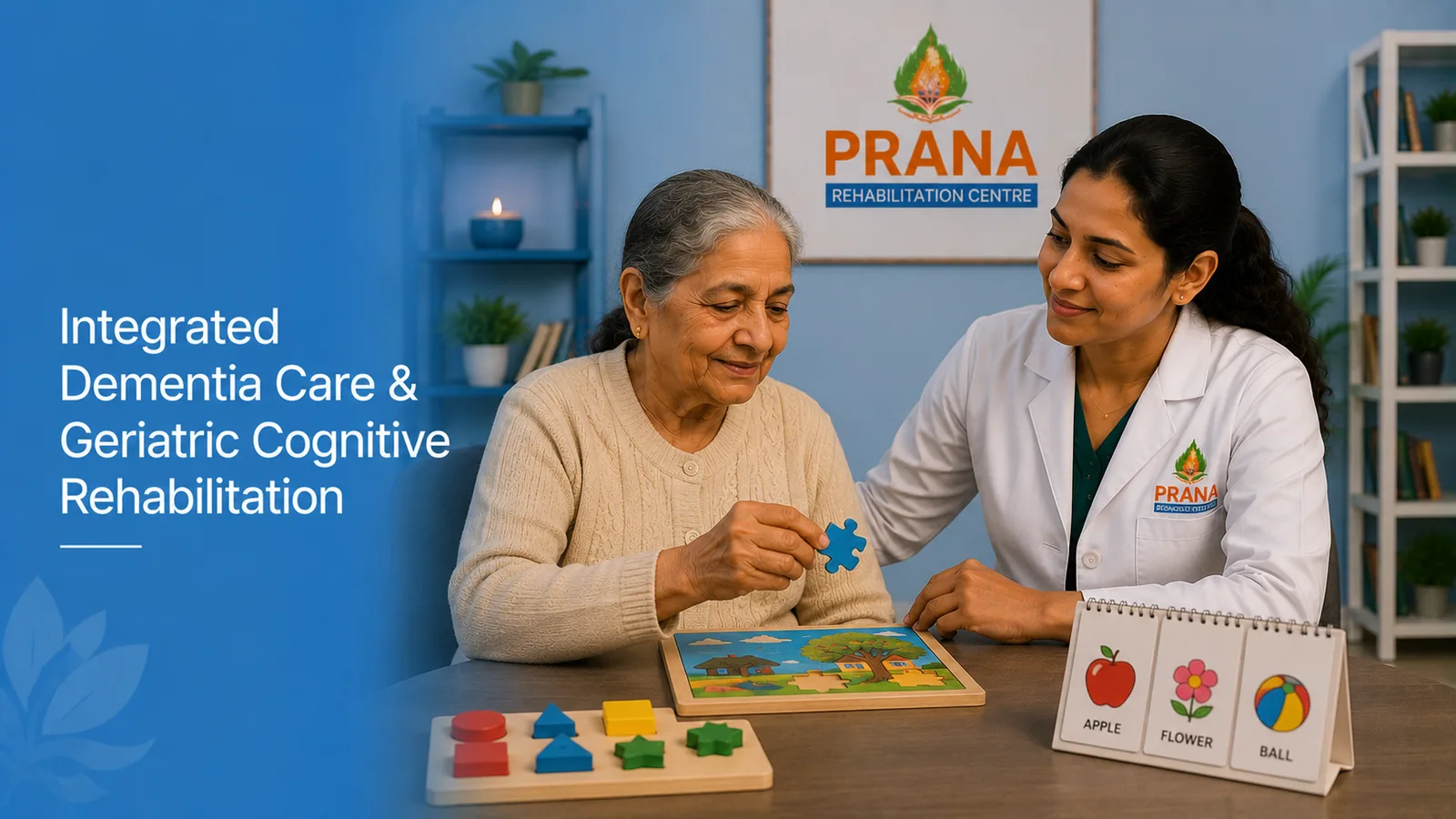
Dementia is a progressive neurological condition that affects memory, thinking, behaviour, communication, and the ability to perform everyday activities. Commonly seen in older adults, it can significantly impact independence, safety, emotional well-being, and overall quality of life. Conditions such as Alzheimer's disease and other cognitive disorders require structured, supportive, and patient-centred care to slow functional decline and enhance daily functioning. At Prana Rehabilitation Centre, our Dementia Care and Geriatric Rehabilitation program is designed to provide compassionate, structured, and therapeutic support that enhances cognitive function, maintains independence for as long as possible, and ensures safety in daily life. Our approach focuses on preserving existing abilities, improving engagement in meaningful activities, and creating a calm, predictable, and supportive environment for both patients and caregivers. We also recognize that dementia affects not only memory but also emotional health, behaviour, and family dynamics. Many patients may experience confusion, anxiety, agitation, or social withdrawal, while caregivers often face emotional stress and burnout. Our integrated care model addresses both patient and caregiver needs through structured rehabilitation and continuous support. Our Dementia Care Program Includes Cognitive stimulation therapy — memory, attention, and thinking exercises Orientation training — time, place, and person awareness Routine-based activity planning for stability and reduced confusion Functional task training for daily living activities (ADLs) Gentle physical activity and mobility exercises Balance training and fall prevention strategies Sensory stimulation activities — music, touch, visual cues Behavioural management strategies and communication training Psychological support, emotional care, and reassurance techniques Cognitive assessment and neuropsychological evaluation to understand cognitive strengths and plan personalized intervention Cognitive workbooks and structured home practice programs to support memory, attention, and thinking skills Caregiver education, training, and ongoing support guidance Risk reduction and home safety education Naturopathy support including simple yoga-based movements, breathing exercises (pranayama), relaxation techniques, and calming meditation practices Psychological Rehabilitation and Caregiver Support As part of our integrated approach, we emphasize psychological rehabilitation and caregiver support including psychoeducation, stress management strategies, communication techniques, and guidance on handling behavioural changes. This helps reduce caregiver burden while improving the quality of care provided at home. We also focus on risk reduction strategies such as fall prevention, wandering prevention, medication adherence support, and environmental modifications to ensure safety and reduce complications in daily living. Benefits of Dementia Care & Rehabilitation Improves memory and cognitive engagement Enhances orientation to time, place, and people Reduces anxiety, agitation, and confusion Supports independence in daily activities for a longer duration Improves mobility, balance, and safety Enhances emotional well-being and sense of comfort Provides structured routines for stability and familiarity Reduces caregiver stress through education and support Improves communication and behavioural management Enhances overall quality of life for patients and families Strengthens cognitive functioning through assessment-guided therapy and structured workbooks "We provide dementia care with dignity, compassion, structure, and meaningful engagement — supporting both patients and families throughout every stage of the journey."

Know More
Integrated Musculoskeletal Pain Rehabilitation
Integrated Approach

Integrated Musculoskeletal Pain Rehabilitation

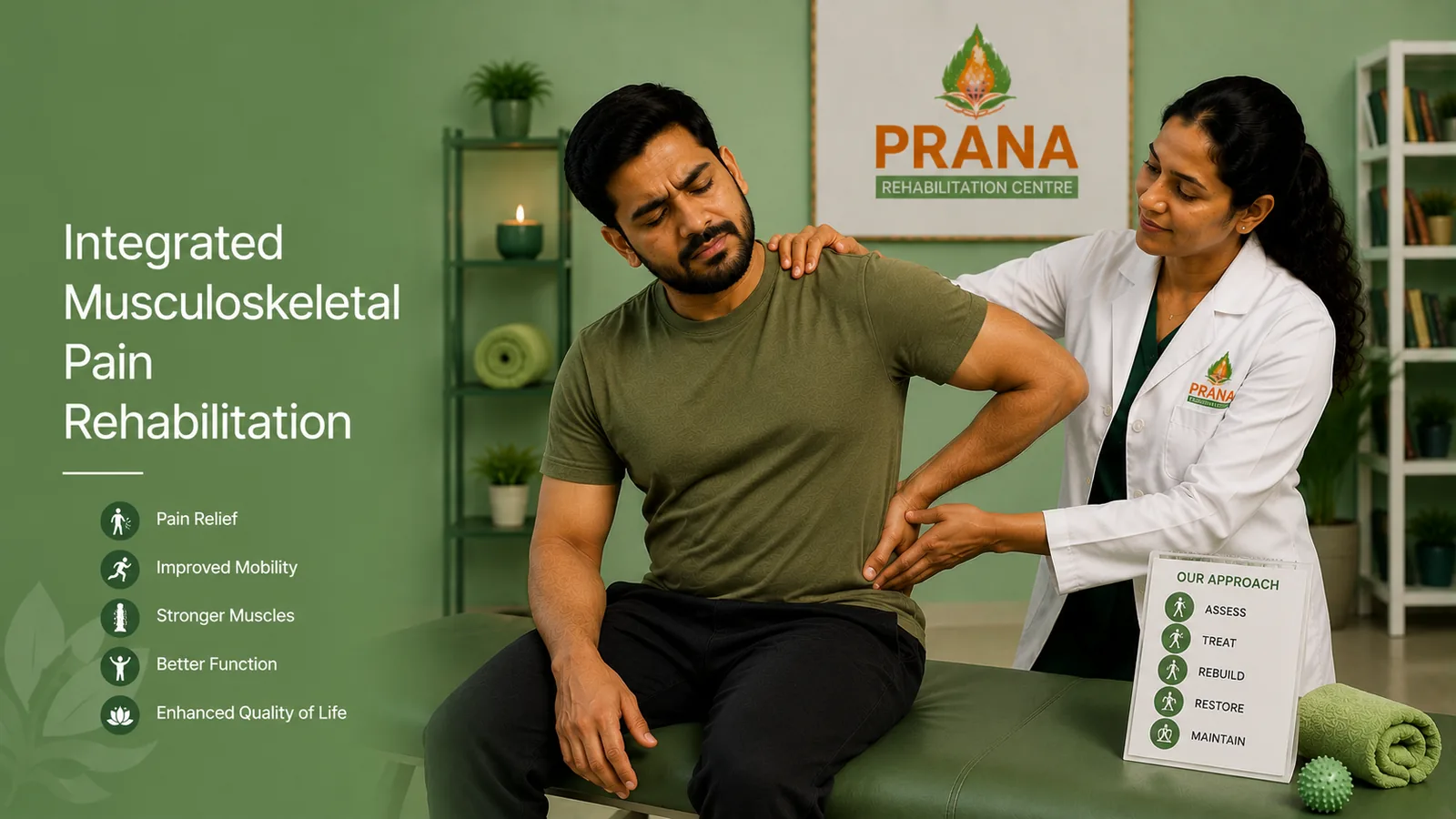
Pain is one of the most common health conditions affecting people of all ages. It may develop due to injury, poor posture, repetitive strain, lifestyle habits, or age-related changes in muscles and joints. While pain can sometimes be short-term, in many individuals it becomes chronic and begins to affect movement, sleep, work, emotional well-being, and overall quality of life. At Prana Rehabilitation Centre, we follow an integrated approach to pain management — focusing not just on symptom relief but on identifying the root cause of pain and addressing it through a combination of physiotherapy, exercise therapy, lifestyle correction, and psychological support. Our goal is to help individuals regain pain-free movement, improve strength and flexibility, correct posture, and return to daily activities with confidence and independence. Our Integrated Pain Management Approach Physiotherapy-Based Pain Relief Physiotherapy plays a key role in reducing pain and improving mobility. Treatment may include: TENS, IFT, and ultrasound therapy Heat and cold therapy Manual therapy and soft tissue release Joint mobilization techniques Pain-relief modalities for acute and chronic conditions Posture correction and movement re-education These techniques help reduce pain, improve blood circulation, relax tight muscles, and support natural healing. Exercise & Functional Rehabilitation Exercise therapy is essential for long-term recovery and prevention of recurrence. It includes: Stretching exercises to improve flexibility Strengthening exercises for muscles and joints Core stability training for spinal support Balance and coordination training Functional training for daily activities Gradual return-to-activity programs Regular movement helps restore function, improve endurance, and reduce the risk of future pain episodes. Ergonomic & Lifestyle Correction Many pain conditions are strongly linked to daily habits and body mechanics. We provide: Workstation and posture assessment Ergonomic correction for sitting, standing, and lifting Lifestyle analysis and activity modification Guidance on safe movement patterns Advice on rest-activity balance Weight management and physical activity planning These changes help reduce strain on muscles and joints and support long-term recovery. Psychological Support Pain is influenced not only by physical factors but also by stress, mood, and emotional response. As part of integrated care, we provide: Pain education and understanding of pain mechanisms Stress management techniques Support for coping with chronic pain Guidance for fear of movement and confidence building This helps patients manage pain more effectively and improves participation in rehabilitation. Naturopathy Support Along with clinical rehabilitation, we include naturopathy-based supportive care such as: Yoga therapy for flexibility and relaxation Meditation for stress reduction and mental calmness Pranayama (breathing exercises) for relaxation and pain modulation Relaxation techniques to reduce muscle tension Diet guidance to support healing and reduce inflammation Chronic Pain Management For long-term conditions such as arthritis, fibromyalgia, and persistent back pain, rehabilitation focuses on: Gentle, regular movement programs Pain management strategies Energy conservation techniques Relaxation and recovery exercises Long-term self-management training Patient Education & Self-Management Patient education is a key part of our rehabilitation approach. We focus on: Understanding the cause of pain Learning correct posture and movement techniques Preventing recurrence through lifestyle changes Home exercise programs for continuity of careIn selected cases, advanced regenerative options such as PRP (Platelet-Rich Plasma) therapy may be recommended to support tissue healing.                              "Restoring Movement, Reducing Pain, Rebuilding Quality of Life."

Know More
Integrated Rehabilitation for Neuromuscular disorders
Integrated Approach

Integrated Rehabilitation for Neuromuscular disorders

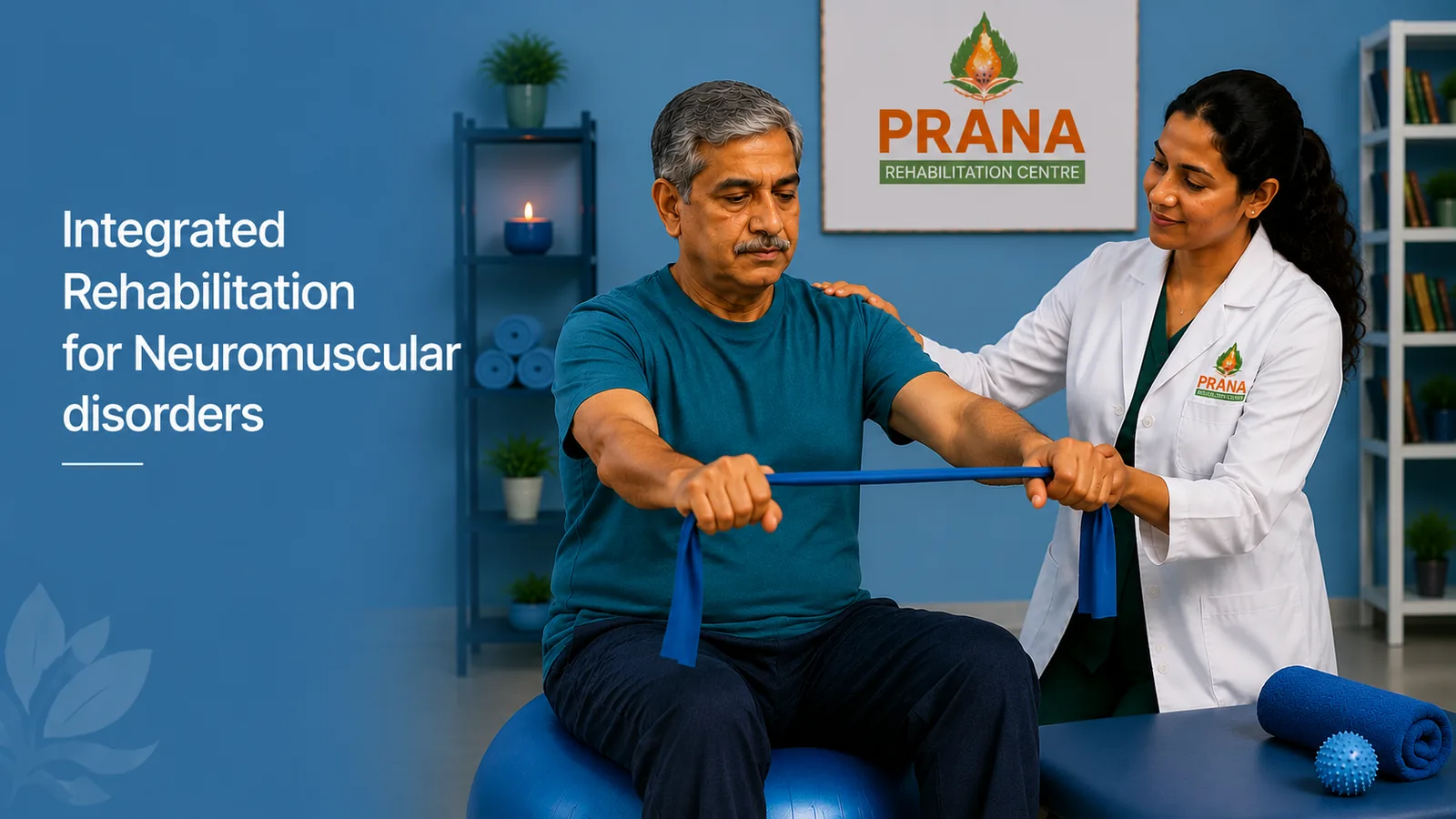
Muscular diseases are a group of conditions that affect muscle strength, endurance, and overall physical function. These conditions may be genetic, autoimmune, metabolic, or secondary to nerve involvement. Common disorders such as muscular dystrophy and other myopathies can lead to progressive weakness, difficulty in walking, reduced balance, fatigue, and challenges in performing daily activities independently. At Prana Rehabilitation Centre, our Neuromuscular Disease Rehabilitation program is designed to provide compassionate, structured, and long-term supportive care that helps individuals maintain muscle function, improve mobility, prevent complications, and enhance overall quality of life. Our approach focuses on preserving independence for as long as possible through safe, guided, and individualized rehabilitation programs. We also understand that muscular diseases affect not only physical strength but also emotional well-being and family life. Patients may experience fatigue, frustration, reduced confidence, and dependency, while caregivers may face long-term care challenges. Our integrated care model supports both patients and families through continuous rehabilitation and education. Our Neuromuscular Disease Rehabilitation Program Includes Gentle strengthening and endurance exercises Range of motion (ROM) and flexibility exercises Stretching to prevent stiffness and contractures Postural correction and alignment training Gait training and mobility support Balance and coordination exercises Breathing and respiratory exercises as required Functional training for daily activities (ADLs) Fatigue management and energy conservation strategies Assistive device training if needed Caregiver training and home care guidance Psychological support and emotional encouragement Risk reduction and complication prevention strategies Our Approach Our rehabilitation program is individualized based on the type and severity of muscular disease, rate of progression, and functional abilities of the person. The focus is on maintaining existing muscle strength, slowing functional decline, and improving independence in daily life. We emphasize safe, regular movement and activity pacing to avoid overexertion while promoting consistent exercise to preserve muscle function. Education on posture, safe mobility, and daily activity management is an important part of rehabilitation. As part of our integrated approach, we also provide psychological support including emotional coping strategies, motivation building, stress management, and long-term adjustment support. Along with this, we include naturopathy-based care such as yoga, meditation, and breathing exercises to support relaxation and overall well-being. We also focus on risk reduction strategies such as fall prevention, joint stiffness prevention, fatigue management, and maintaining a safe home environment. Benefits of Neuromuscular Disorder Rehabilitation Helps maintain muscle strength and function Improves mobility, balance, and coordination Reduces risk of stiffness and contractures Enhances independence in daily activities Supports better posture and movement control Reduces fatigue through energy conservation techniques Improves breathing and physical endurance where involved Prevents complications related to long-term weakness Enhances emotional well-being and confidence Provides caregiver education and long-term support Improves overall quality of life and functional ability "We are committed to providing integrated, compassionate rehabilitation — helping individuals maintain strength, preserve independence, and live with dignity and confidence."

Know More
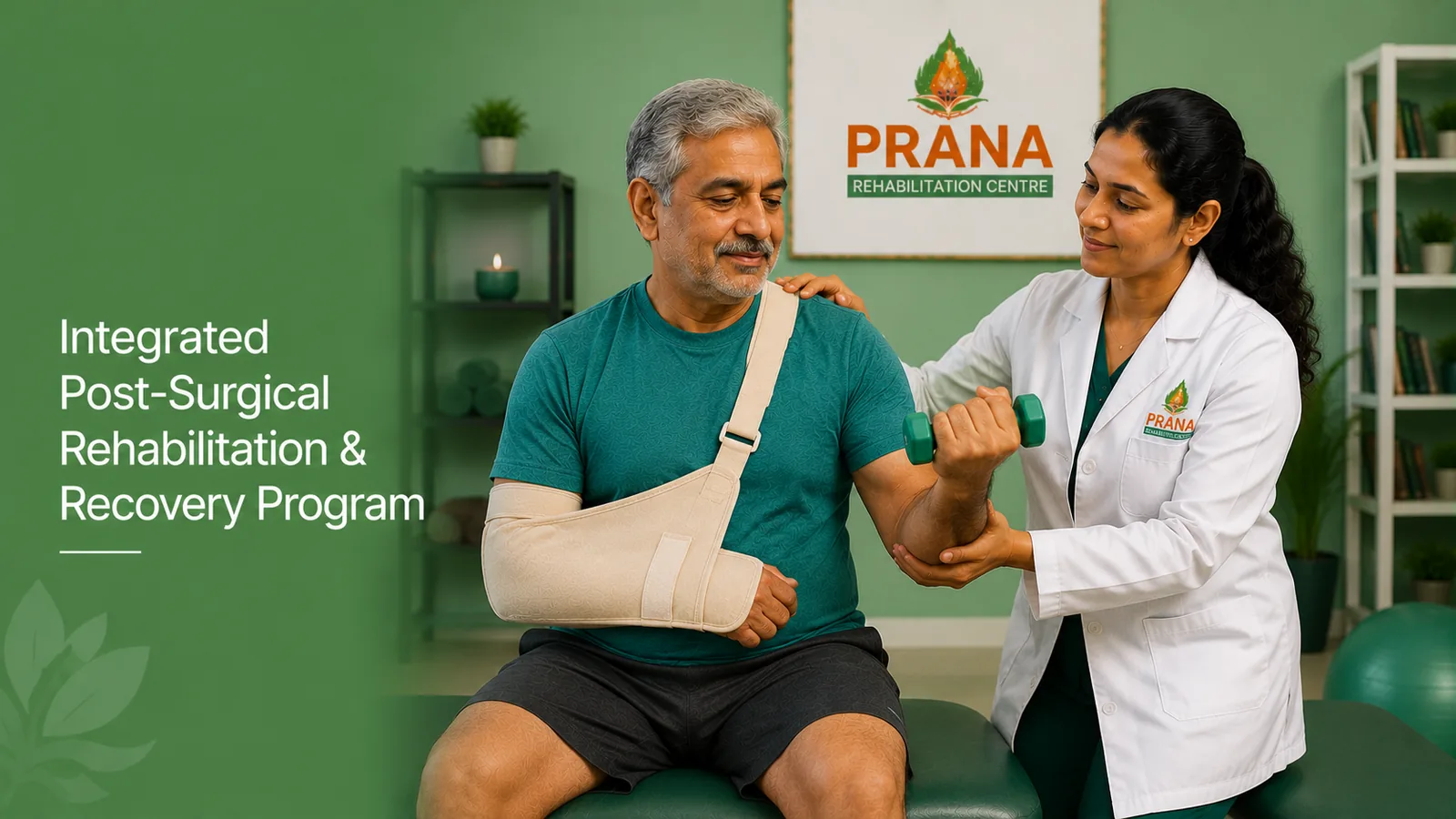
Integrated Post-Surgical Rehabilitation & Recovery Program
Integrated Approach

Integrated Post-Surgical Rehabilitation & Recovery Program

Post-surgical rehabilitation is a structured recovery program designed to help individuals regain movement, strength, function, and independence after surgery. Depending on the type of surgery — orthopedic, neurological, abdominal, or injury-related — patients may experience pain, stiffness, weakness, reduced mobility, and difficulty returning to daily activities. Appropriate rehabilitation is essential for safe healing, prevention of complications, and optimal functional recovery. At Prana Rehabilitation Centre, our post-surgical rehabilitation program provides comprehensive, goal-oriented care combining physiotherapy, psychological support, and naturopathy-based therapies to support complete recovery of body and mind. We ensure a progressive and individualized approach based on surgical type, healing stage, pain levels, and functional goals. Our Post-Surgical Rehabilitation Program Includes Pain and swelling management Gentle range of motion (ROM) exercises Progressive strengthening exercises Posture correction and movement retraining Scar and soft tissue management Gait training and mobility re-education Functional training for daily activities (ADLs) Balance and coordination exercises Gradual return-to-activity progression Psychological support including reassurance and motivation Naturopathy support including yoga therapy, pranayama, meditation, and relaxation techniques Caregiver guidance and home care education Risk reduction and complication prevention strategies Our Integrated Rehabilitation Approach Rehabilitation is tailored to the individual's surgical procedure, recovery phase, and functional capacity. The focus is on restoring movement safely while preventing complications such as stiffness, weakness, and reduced mobility. We emphasize graded activity progression, safe movement patterns, and structured exercise programs to ensure steady recovery and return to independence. Psychological rehabilitation is included as part of care, focusing on pain education, confidence building, stress management, and reducing fear of movement to improve active participation in recovery. Risk reduction strategies include prevention of falls, stiffness, post-surgical complications, and improper movement patterns, along with education on safe positioning and daily activity planning. Naturopathy-based support such as yoga, breathing exercises, meditation, relaxation practices, and dietary guidance is integrated to support healing, reduce stress, and improve overall well-being. Benefits of Post-Surgical Rehabilitation Restores mobility and functional independence Reduces pain, swelling, and stiffness Improves strength, balance, and coordination Prevents post-surgical complications Supports faster and safer recovery Enhances confidence and reduces fear of movement Improves overall physical and emotional well-being Supports return to daily activities and work Provides structured caregiver guidance and home care support Promotes holistic recovery through mind-body practices "We are committed to providing integrated, compassionate post-surgical rehabilitation — helping individuals regain strength, restore function, and return to life with dignity and confidence."

Know More
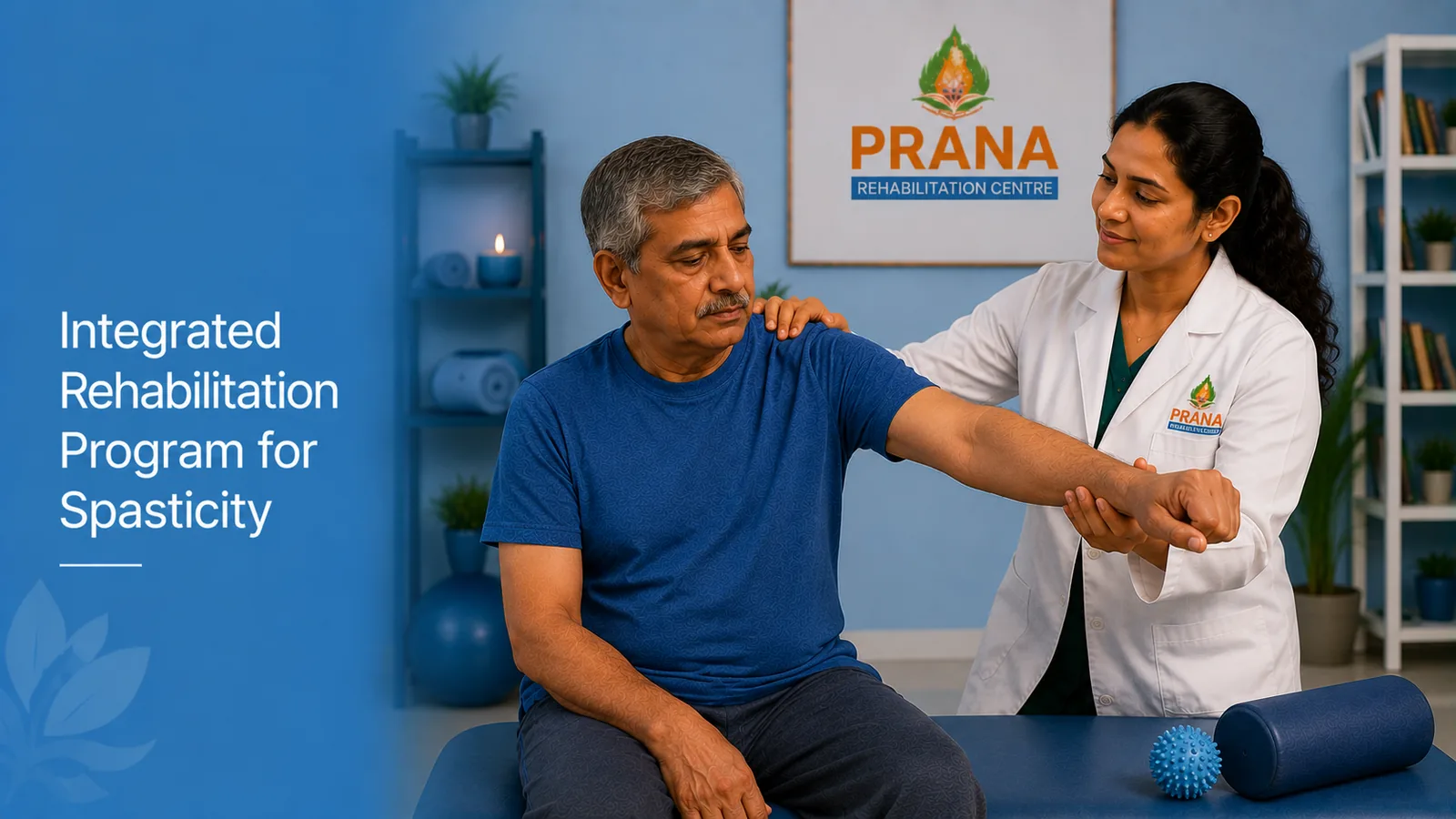
Integrated Rehabilitation Program for Spasticity
Integrated Approach

Integrated Rehabilitation Program for Spasticity

Spasticity rehabilitation is a specialized therapy program designed to help individuals manage muscle stiffness, tightness, and involuntary muscle spasms caused by neurological conditions. Spasticity is commonly seen after stroke, cerebral palsy, spinal cord injury, traumatic brain injury, multiple sclerosis, and other neurological disorders. The main goal of rehabilitation is to improve movement control, reduce discomfort, enhance functional independence, and improve overall quality of life. At Prana Rehabilitation Centre, our spasticity rehabilitation program provides a comprehensive, individualized, and goal-oriented approach that focuses on reducing abnormal muscle tone while improving flexibility, strength, posture, balance, and coordination. What Our Program Focuses On Improving movement control and functional independence Reducing muscle tightness and abnormal muscle tone Enhancing flexibility, strength, and coordination Preventing long-term complications and deformities Supporting safer and smoother daily movement Rehabilitation Interventions Include Stretching exercises to reduce muscle stiffness Strengthening exercises for better muscle control Postural correction and positioning techniques Functional training for daily activities (ADLs) Gait training and mobility re-education Occupational therapy for hand and upper limb function Splinting and assistive device training when required Advanced neuro-rehabilitation techniques for recovery optimization Psychological Support Along with physical rehabilitation, psychological support is included to help individuals adapt better to long-term neurological conditions. This includes emotional support, coping strategies, motivation building, confidence enhancement, stress management, relaxation guidance, and education about the condition and recovery process to encourage active participation in therapy. Naturopathy-Based Supportive Care Naturopathy-based supportive care is integrated to promote holistic healing and overall well-being, including: Yoga therapy for flexibility and balance Pranayama (breathing exercises) for relaxation and stress control Meditation and relaxation techniques for mental calmness Mudra practices for neuromuscular balance and focus Personalized diet guidance to support energy levels, muscle health, and recovery Why Early Rehabilitation Matters Early and consistent rehabilitation plays a key role in preventing: Joint stiffness and muscle shortening Pain and discomfort Contractures and deformities Long-term mobility limitations It also helps in restoring independence and improving overall quality of life. "We are committed to delivering integrated, compassionate, and result-oriented spasticity rehabilitation — helping individuals move with greater ease, regain independence, and live with confidence."

Know More

Frequently Asked Questions

What is an integrated treatment approach?

An Integrated approach combines medical care, counseling, therapy, naturopathy, yoga and rehabilitations for holistic recovery.

Why is an integrated approach important in rehabilitation?

It treats the physical, mental, emotional, and behavioral aspects of recovery together.

What services are included in your integrated treatment approach?

Our approach includes medical treatment, psychology, physiotherapy, naturopathy, yoga, counseling, and wellness therapies.

Is the treatment plan personalized?

Yes, every treatment plan is customized based on individual recovery needs.

Does integrated treatment help prevent relapse?

Yes, it strengthens emotional balance and healthy coping skills for long-term recovery.

Is yoga included in the integrated rehabilitation program?

Yes, yoga and meditation are included to support mental and physical wellness.

Can physiotherapy be part of integrated treatment?

Yes, physiotherapy helps improve strength, mobility, and physical recovery.

How can I start integrated treatment at Prana Rehab?

You can download mobile app from store or contact Prana Rehab through phone/WhatsApp +91 944 272 4890, or the website (https://pranarehabtrichy.com/) to schedule an appointment.

Related Articles

Pain Rehabilitation
Pain Rehabilitation

Pain Management Pain is one of the most common health concerns affecting people of all ages. It may arise due to poor posture, injury, muscle …

Stress Management
Stress Management

Stress Management: Finding Balance in a Busy World Why Stress Has Become So Common ? In today’s fast-paced lifestyle, stress has quietly become a part …

Diet Therapy
Diet Therapy

"மருந்தென வேண்டாவாம் யாக்கைக்கு அருந்தியது அற்றது போற்றி உணின்" Diet plays a vital role in maintaining good health, preventing illness, and supporting recovery. It is not merely …

View All Blogs